You Won’t Believe What We Found Driving Through Corfu’s Hidden Corners
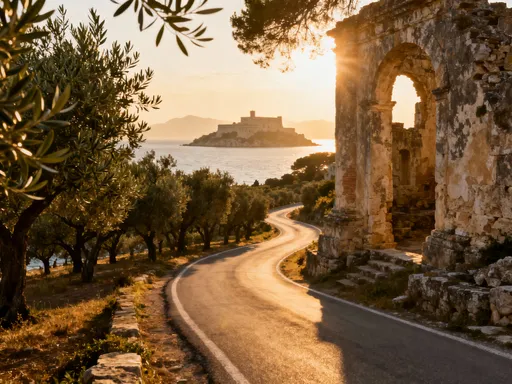
Driving through Corfu feels like flipping through a living postcard—olive groves roll into hilltop villages, and every twist in the road reveals another stone mansion or ancient fortress peeking through the trees. I didn’t expect landmark buildings to be this personal, but behind every weathered wall is a story waiting to unfold. Self-driving let us chase sunlight across centuries, from Venetian citadels to hidden Byzantine churches, all at our own pace. The island’s architectural legacy isn’t confined to guidebook covers; it lives in quiet courtyards, seaside terraces, and mountain-locked chapels that only reveal themselves to those willing to wander beyond the bus routes. With keys in hand, we discovered that Corfu’s true character isn’t just seen—it’s experienced, one sun-dappled curve at a time.
Why Corfu by Car Changes Everything
Exploring Corfu without a car is like reading a novel with every other chapter missing. While the island’s coastal resorts and Old Town offer charm within walking distance, its soul lies scattered across remote valleys, coastal cliffs, and elevated plateaus that public transport rarely reaches. Buses follow fixed routes and limited schedules, often dropping visitors at central points miles from the actual landmarks. For those seeking more than a surface glimpse, having a car transforms the journey from passive observation to active discovery. The freedom to pause at a crumbling stone chapel, detour down a dirt path flanked by wild thyme, or arrive at a hilltop village just as the morning mist lifts is unmatched by any organized tour.
Many of Corfu’s most evocative sites are tucked away where roads grow narrow and signage fades. The island’s topography—steep hills, deep ravines, and coastal inlets—means that even destinations only a few kilometers apart can feel worlds away. A car bridges these gaps, turning isolated ruins into accessible stops and transforming overlooked villages into meaningful waypoints. We found that driving allowed us to follow a natural rhythm: lingering where beauty held us, pressing forward when curiosity pulled us onward. This autonomy turned our trip into a personalized narrative rather than a rehearsed itinerary.
Additionally, traveling by car opens access to architectural gems that exist outside the mainstream tourist circuit. These include abandoned rural manors, 18th-century watchtowers perched on capes, and family-owned estates with centuries-old olive presses still in use. Without a vehicle, reaching such places often requires long hikes or unreliable local rides, which can deter even the most determined traveler. With a car, these hidden layers of Corfu’s history become part of the journey. Each turn off the main road offered not just a new view, but a deeper understanding of how generations have shaped and sustained life on this lush, storied island.
The Venetian Fortress: Corfu Town’s Crown Jewel
Rising above Corfu Town like a stone sentinel, the Old Fortress is the island’s most iconic landmark and a UNESCO World Heritage site. Built by the Venetians in the 15th century, it was designed to protect the city from Ottoman invasions, and its strategic location on a narrow peninsula jutting into the sea made it nearly impregnable. Over the centuries, the fortress changed hands under Venetian, French, and British rule, each leaving subtle architectural imprints. The blend of military engineering and Mediterranean elegance is evident in its bastions, moat, and arched passageways, which still echo with the footsteps of centuries past.
Visiting the fortress offers more than a history lesson; it provides one of the best vantage points on the island. From the upper ramparts, the view stretches across Corfu Town’s red-tiled rooftops, the deep blue Ionian Sea, and the distant silhouette of mainland Greece. We recommend arriving in the late afternoon when the golden light bathes the stone walls and crowds begin to thin. Parking is available near Kanoni, a short drive southeast of the Old Town, and from there, a scenic coastal road leads directly to the fortress entrance. While taxis are an option, driving allows for stops along the way, including a quiet cove where we paused to watch sailboats glide beneath the fortress walls.
Inside, the fortress complex includes a military museum, a small church, and well-preserved artillery positions that illustrate the evolution of coastal defense. The New Fortress, located on the opposite side of the town, complements the Old Fortress and was also constructed by the Venetians to strengthen the city’s defenses. Together, they form a dual bastion that once made Corfu one of the most fortified cities in the Mediterranean. While the New Fortress hosts cultural events and occasional exhibitions, the Old Fortress remains the heart of Corfu’s military heritage. For visitors, the experience is both educational and deeply atmospheric, especially when the wind carries the sound of church bells across the water, blending past and present in a single moment.
Achilleion Palace: Where Myth Meets Grandeur
Nestled in the village of Gastouri, about 10 kilometers south of Corfu Town, the Achilleion Palace stands as a monument to 19th-century romanticism and imperial nostalgia. Built in 1890 for Empress Elisabeth of Austria, known affectionately as Sisi, the palace was her retreat from court life and personal grief. Inspired by Greek mythology, particularly the hero Achilles, the estate blends neoclassical architecture with dramatic statuary and lush gardens that cascade down the hillside. The central motif—Achilles as both warrior and tragic figure—resonates throughout the villa, from the grand staircase adorned with frescoes to the terrace where a marble statue of the dying hero lies in solemn repose.
The palace’s interior is equally compelling, with period furnishings, ornate ceilings, and portraits that offer glimpses into Sisi’s introspective nature. She spent only brief periods at the Achilleion, but her presence lingers in the melancholy elegance of the rooms. After her assassination in 1898, the palace was sold and later purchased by German Emperor Wilhelm II, who used it as a summer residence. His additions, including a statue of Achilles as a triumphant warrior, contrast with Sisi’s more sorrowful interpretation, creating a fascinating dialogue between two imperial visions.
Today, the Achilleion operates as a museum, and while it attracts many visitors, arriving early in the morning ensures a more intimate experience. We reached the site just after opening and had the gardens almost to ourselves, the morning light filtering through cypress trees and illuminating the mosaics along the walkways. The panoramic view from the upper terrace includes the entire southern coast of Corfu, making it a perfect spot for quiet reflection. For those driving, the route from Corfu Town is well-marked and offers several scenic pull-offs. The palace’s popularity means parking can fill quickly, especially in peak season, so an early start is advisable. Despite the crowds later in the day, the emotional weight of the place remains palpable—a testament to how architecture and myth can intertwine to create something timeless.
Villa Spyrou: A Hidden Art Deco Treasure
Far from the well-trodden paths of Corfu’s tourist hubs, near the quiet village of Agios Georgios on the northwest coast, lies a rare architectural gem: Villa Spyrou. This privately owned residence, built in the 1930s, stands as one of the few surviving examples of Art Deco modernism on the island. While not officially open to the public, its striking façade and seaside perch make it a rewarding detour for those exploring Corfu’s lesser-known corners. We discovered it only after asking a local café owner for “old houses near the sea,” a simple question that led to enthusiastic directions and a handwritten note with a rough map.
The villa’s design breaks from the island’s traditional Venetian and neoclassical styles, featuring clean lines, geometric forms, and large windows that frame the Ionian Sea. Its white stucco walls and flat roof reflect the influence of early 20th-century European modernism, adapted to the Mediterranean climate. Set on a rocky outcrop surrounded by olive trees and native shrubs, the building blends boldness with harmony, standing out without disrupting the natural landscape. Though we could only view it from the exterior, the symmetry and proportion of the structure were striking, especially in the late afternoon light when shadows emphasized its architectural details.
Reaching Villa Spyrou requires navigating a narrow, unmarked road that branches off the main coastal route. GPS signals can be unreliable in this area, so relying on local knowledge is essential. We found that downloading offline maps and noting landmarks—such as a small blue chapel and a bend where the road splits—helped us stay on track. The journey itself became part of the adventure, with each turn offering glimpses of secluded coves and terraced farms. While the villa remains a private residence, its existence reminds us that Corfu’s architectural story is not frozen in the past but includes moments of innovation and individual expression. For travelers, finding places like this—off the map but rich in character—adds depth and surprise to the journey.
Mon Repos: From Royal Retreat to Archaeological Insight
Located just south of Corfu Town, nestled within a pine-forested estate near the ancient city of Korkyra, Mon Repos is a neoclassical villa with a layered history. Originally built in the early 19th century as a summer residence for the British Lord High Commissioner, it later became the favored retreat of the Greek royal family. Princess Sophia and Prince Andrew of Greece lived here during the early 20th century, and it was in this villa that Prince Philip, Duke of Edinburgh, was born in 1921. Though the family’s time on Corfu ended with political upheaval, the estate has been preserved as a cultural site, now housing an archaeological museum dedicated to the island’s ancient past.
The villa itself is an elegant example of Regency-style architecture, with tall windows, colonnaded verandas, and interiors that reflect the tastes of its aristocratic occupants. While the upper floors are not always accessible to the public, the ground-level rooms display artifacts unearthed from nearby excavations, including pottery, inscriptions, and architectural fragments from the ancient city of Korkyra. These exhibits connect the villa to the deeper history of the region, showing how centuries of settlement have shaped the landscape. Informative panels, available in English and Greek, provide context without overwhelming the visitor, making the experience both educational and engaging.
The surrounding estate spans over 250,000 square meters of protected land, with walking trails that wind through pine and cypress groves, past olive groves, and down to small pebble beaches. Turtles nest along the shoreline during summer months, and conservation efforts are ongoing to protect this natural habitat. We spent a quiet morning walking the trails, enjoying the shade and the sound of cicadas, before visiting the museum. The combination of natural beauty and historical significance makes Mon Repos more than a single destination—it’s a place where nature, memory, and archaeology converge. For drivers, the access road is well-maintained, and parking is available near the entrance. Opening hours vary by season, so checking ahead is recommended, but the effort is well worth it for those seeking a peaceful yet meaningful stop.
Churches and Bell Towers: Corfu’s Spiritual Skyline
Scattered across Corfu’s hills and villages, centuries-old churches form a quiet but constant presence in the island’s landscape. With their red-tiled roofs, whitewashed walls, and slender bell towers, these sacred spaces are more than places of worship—they are landmarks that have guided travelers for generations. Many were built during the Venetian period or earlier, and their architecture reflects a blend of Byzantine tradition and local craftsmanship. While some, like the Church of Saint Spiridon in Corfu Town, are well-known, others remain hidden in remote areas, accessible only by car and often missed by guided tours.
Saint Spiridon’s Church, located in the heart of the Old Town, houses the relics of the island’s patron saint and is a site of deep cultural significance. The bell tower, standing separate from the main church, is a classic example of Venetian-influenced design. Inside, the atmosphere is reverent, with flickering candles, embroidered vestments, and the scent of incense lingering in the air. Services are still held regularly, and visitors are welcome to observe quietly. The church’s location makes it easy to visit, but arriving early ensures a more contemplative experience before the midday crowds arrive.
Further afield, in the village of Spartillas, we discovered a small hilltop chapel dedicated to the Virgin Mary. Reached via a steep, winding road, the chapel offered panoramic views of the surrounding countryside and the distant sea. Its simple stone construction and wooden door exuded a timeless serenity. Inside, frescoes—faded but still vibrant—depicted biblical scenes in rich blues and golds. We were the only visitors during our hour there, and the silence was broken only by the wind and the occasional chime of the bell. These rural churches, often maintained by local communities, represent a living tradition, where faith and heritage are preserved through quiet dedication. Driving to such sites allows travelers to witness not just architecture, but continuity—the unbroken thread of devotion that has shaped Corfu’s identity for centuries.
Driving Tips That Save Time and Stress
While driving in Corfu offers unmatched freedom, it also requires preparation and awareness. The island’s roads vary widely in quality and design, from well-paved coastal highways to narrow mountain paths barely wide enough for two cars to pass. Steep inclines, sharp turns, and occasional gaps in signage mean that navigation demands attention. We quickly learned that relying solely on GPS could lead to frustrating detours, especially in rural areas where signals drop or maps are outdated. To avoid this, we downloaded offline versions of Google Maps and used them alongside a physical road atlas, which proved invaluable when exploring remote regions.
Choosing the right rental car is equally important. Compact models are ideal for navigating tight village streets and fitting into small parking spots, but they may lack the power needed for steep climbs. We opted for a small SUV with manual transmission, which provided better control on inclines and more ground clearance for unpaved roads. Automatic transmissions are available but less common and often more expensive. It’s also wise to inspect the vehicle thoroughly before departure, checking tires, lights, and fuel levels, and ensuring that emergency supplies like a warning triangle and reflective vest are included, as these are legally required in Greece.
Fuel stations are plentiful along main routes but become sparse in mountainous or coastal areas. We made it a habit to refill whenever we passed a station, especially before heading inland. Most accept credit cards, but having some cash on hand is a good backup. Local driving habits can also take some adjustment—while most drivers are courteous, some may overtake on curves or park unpredictably. Defensive driving is recommended, particularly at night or during peak tourist season. Speed limits are generally respected, but rural roads often lack enforcement, so staying alert is crucial.
Finally, patience and flexibility are the best tools for a smooth journey. Road closures, unexpected detours, and the occasional goat on the asphalt are part of the experience. We found that embracing these moments—stopping to ask for directions, sharing a smile with a local farmer, or simply pausing to take in a view—added richness to our trip. Driving in Corfu isn’t just about getting from place to place; it’s about moving through a landscape alive with history, beauty, and quiet surprises.
Conclusion: Why the Journey Through Stone and Time Matters
Landmark buildings are more than relics of the past; they are living fragments of identity, shaped by the hands of those who built them and the generations who have lived among them. Our journey through Corfu by car allowed us to move beyond curated exhibitions and timed tours, to experience history not as a display, but as a presence. Every fortress, palace, and village church we visited was more than a destination—it was a chapter in a story written in stone, mortar, and memory. By driving ourselves, we didn’t just see these places; we felt their rhythm, heard their silence, and understood their place in the island’s enduring spirit.
The true value of self-guided exploration lies in its intimacy. It allows space for reflection, for unexpected discoveries, and for connections that no itinerary can plan. Whether standing in the shadow of a Venetian bastion, walking through the gardens of a royal palace, or pausing at a hillside chapel with no name, we were not just tourists—we were witnesses to continuity. Corfu’s architecture tells a story of resilience, adaptation, and beauty, shaped by centuries of cultural exchange and natural harmony.
For families, couples, or solo travelers seeking depth over distraction, driving Corfu offers a rare opportunity: to travel at your own pace, to follow curiosity, and to let the island reveal itself gradually. It’s a journey that rewards patience, preparation, and presence. And in the end, what we found was not just stunning landmarks, but a deeper understanding of how places hold memory, how landscapes shape identity, and how a simple turn in the road can lead to a moment of lasting meaning. Corfu, seen through the windshield, is not just a destination—it’s a conversation across time.