What Happens When Sicily’s Streets Turn Into Festivals at Night
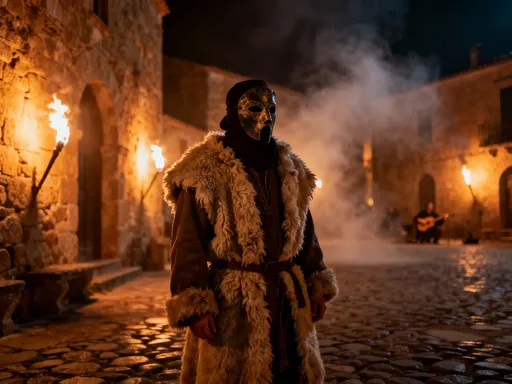
You know that feeling when you stumble upon a street festival in Sicily and suddenly, everything changes? The air hums with music, the smell of fried arancini fills the alleys, and strangers pull you into dance. I didn’t expect to witness centuries-old traditions come alive through fire dancers, saint processions, and midnight feasts. This isn’t just tourism—it’s immersion. In Sicily, festivals aren’t performances; they’re living pulses of culture, faith, and joy that transform towns from quiet by day to electric by night. These nighttime celebrations are not staged for cameras or scheduled for convenience—they unfold organically, rooted in devotion, shaped by history, and sustained by communal pride. To walk through a Sicilian town during one of these festivals is to step into a rhythm older than memory, where every candlelit window and echoing hymn tells a story of survival, identity, and belonging.
The Soul of Sicilian Festivals: More Than Just Celebration
Sicilian festivals are not merely seasonal events—they are the heartbeat of island life, pulsing through centuries of layered history. Rooted in a blend of Catholic devotion, ancient pagan rites, and agrarian rhythms, these celebrations serve as both spiritual observance and cultural affirmation. Each town guards its own unique festival calendar, often centered around the feast day of a patron saint, but layered with meanings that stretch far beyond the church. In places like Noto, where Baroque facades glow amber under moonlight, the evening processions feel like sacred theater—statues draped in velvet, carried on the shoulders of devoted men, while women in black lace follow behind, lighting candles in silent prayer. The air carries the scent of beeswax and jasmine, and the rhythm of distant drums echoes through narrow streets, drawing even the most hesitant observer into the current of collective emotion.
What sets Sicilian festivals apart is their authenticity. Unlike commercialized tourist events elsewhere, these gatherings are not curated for outside eyes. Locals do not perform; they participate. Children run barefoot between stalls selling sesame cookies and candied fruit, elders chant hymns from memory, and entire families gather on balconies to watch the procession pass below. These festivals preserve oral traditions, regional dialects, and artisan crafts—such as the intricate papier-mâché puppets used in Palermo’s folk dramas. The music, too, is deeply local: traditional tambourines, frame drums, and wind instruments accompany chants that have changed little over generations. In this way, festivals act as living archives, safeguarding cultural identity in an age of globalization.
Yet these traditions are not frozen in time. Modern Sicily has found ways to honor the past while embracing the present. Young musicians incorporate jazz and electronic elements into traditional melodies. Local governments collaborate with artisans to restore historic floats and costumes. And social media now allows younger generations to share their heritage with a wider audience, without diluting its meaning. Still, the core remains unchanged: a deep sense of community, a reverence for ancestors, and a belief that joy and sorrow are not opposites, but companions. To witness a festival in Sicily is to understand that celebration here is not escapism—it is resilience made visible, faith made audible, and history made tangible.
Syracuse’s Feast of Santa Lucia: Light, Sweets, and Sorrow
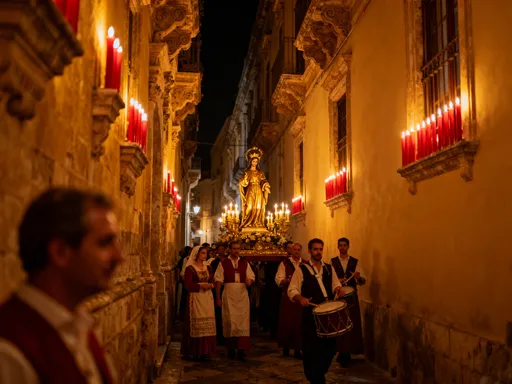
On December 13th, the island city of Syracuse transforms into a luminous sanctuary of remembrance and hope during the Feast of Santa Lucia. The celebration centers on Ortigia, the ancient heart of the city, where cobblestone streets become rivers of light as thousands gather to honor Saint Lucy, a young martyr believed to have brought food to Christians hiding in catacombs during Roman persecution. Her story—of faith, sacrifice, and miraculous light—is reenacted each year with solemn beauty. At dusk, the statue of Santa Lucia, dressed in white with a crown of candles upon her head, is carried from the Church of Santa Lucia alla Badia through the winding alleys of the old town. The procession moves slowly, accompanied by mournful choral hymns and the steady beat of muffled drums, creating an atmosphere of quiet reverence that lingers in the cool winter air.
One of the most touching aspects of this festival is the way it intertwines grief and gratitude. Locals light red candles in their windows—a symbol of both mourning and protection—and many abstain from eating bread or pasta on this day, replacing their usual meals with cuccìa, a sweet wheat berry pudding mixed with ricotta and chocolate. This dish, traditionally associated with the miracle of the wheat ship that arrived in Syracuse on the saint’s feast day during a famine, connects the present to centuries of hardship and deliverance. Families gather to prepare it together, passing down recipes and stories from grandmother to granddaughter. Children, dressed in white as a sign of purity, walk alongside the procession, some holding small lanterns, their faces glowing in the candlelight.
For visitors, the experience is both intimate and moving. Unlike larger, more chaotic festivals, Santa Lucia’s celebration maintains a meditative pace, inviting reflection rather than spectacle. Tourists are welcomed not as spectators, but as quiet witnesses. There is no stage, no ticketed seating—just the shared space of the street, where locals and travelers stand side by side in respectful silence. Photographers are asked to refrain from flash, and loud conversations fade as the statue passes. Yet warmth remains: vendors offer warm cups of jasmine tea, and neighbors invite guests into their homes for a taste of homemade cuccìa. It is a powerful reminder that some of the most meaningful cultural experiences are not loud or flashy, but deeply human—rooted in memory, shaped by loss, and illuminated by hope.
Taormina’s Greek Theatre Festival: Where Ancient Stone Meets Modern Art
Each summer, under a sky dusted with stars and the ever-present gaze of Mount Etna, Taormina hosts one of Sicily’s most elegant cultural events—the Greek Theatre Festival. Held in the 3rd-century BC amphitheater carved into the mountainside, this open-air performance series brings together opera, classical music, dance, and contemporary theater in a setting that feels both timeless and electric. As daylight fades, the limestone stage glows golden, then deepens into shadow, while the audience—dressed in linen and silk, sipping glasses of local Nero d’Avola—settles into their stone seats. The first notes of an aria drift across the valley, echoing off the cliffs, and for a moment, the boundary between past and present dissolves. This is not just a concert; it is a dialogue between antiquity and modernity, made possible by a venue that has witnessed gladiator battles, Roman spectacles, and now, the soaring voices of today’s finest performers.
The atmosphere at the festival is one of refined celebration. Unlike the boisterous street festivals of Palermo or Enna, Taormina’s event draws an international crowd seeking cultural enrichment in a breathtaking setting. Yet it remains deeply Sicilian in spirit. Local chefs set up pop-up stalls offering arancini, caponata, and chilled glasses of almond milk. Artisans display handmade ceramics and silk scarves in the piazza outside the theater. And between acts, conversations drift in multiple languages, yet always return to the shared awe of the landscape—the sea shimmering below, the volcano smoking faintly in the distance, the ancient stones beneath their feet. The programming is carefully curated, often featuring Italian classics like Verdi and Puccini, but also embracing modern interpretations, such as jazz ensembles performing beneath the stars or contemporary dance troupes reimagining mythological tales.
For those planning to attend, preparation is key. Tickets sell out months in advance, especially for prime seating near the front or in the center orchestra section. Arriving early is recommended—not only to secure a good spot but to experience the golden hour light spilling over the theater, casting long shadows across the stage. Many visitors choose to dine in Taormina’s historic center before the show, where family-run trattorias serve slow-cooked rabbit, wild fennel pasta, and freshly caught swordfish. The combination of art, architecture, and natural beauty creates an experience that is both intellectually stimulating and emotionally uplifting. More than entertainment, the Greek Theatre Festival embodies Sicily’s ability to honor its past while embracing the creative possibilities of the present.
Palermo’s Festino di Santa Rosalia: Fireworks, Giants, and Street Food Frenzy
No celebration in Sicily matches the scale and intensity of Palermo’s Festino di Santa Rosalia, a ten-day festival in July that transforms the capital into a roaring sea of color, sound, and devotion. Honoring the city’s patron saint, who is said to have saved Palermo from the plague in 1624, the Festino is a sensory explosion—fireworks streaking across the harbor, giant pupi (wooden effigies) paraded through the streets, and drum circles that pulse through the night like a heartbeat. The climax comes on July 15th, when a golden statue of Santa Rosalia, dressed in silver and carried in a crystal casket, is lifted onto a massive float and pulled through the city in a grand procession. Thousands line the route, waving banners, tossing rose petals, and chanting prayers, their voices rising above the roar of fireworks and the crash of cymbals.
The streets of Palermo during the Festino are a labyrinth of delight and chaos. Vendors sell grilled panelle (chickpea fritters), sfincione (Sicilian pizza), and granita di limone, its icy sweetness a relief from the summer heat. Children ride on their fathers’ shoulders, eyes wide at the towering pupi figures dressed as saints and warriors. At dusk, the entire city seems to vibrate with energy—musicians play from balconies, dancers spin in the piazzas, and families gather on rooftops to watch the nightly fireworks display over the sea. One of the most emotional moments occurs when the statue is carried up Monte Pellegrino, the mountain overlooking the city, in a midnight pilgrimage. The path is lined with candles, and the ascent feels like a collective act of faith, each step a tribute to centuries of survival and gratitude.
For visitors, the Festino offers an unparalleled immersion into Sicilian passion and resilience. Unlike quieter, more introspective festivals, this one is loud, proud, and unapologetically exuberant. Yet beneath the spectacle lies deep reverence. Locals speak of Santa Rosalia not as a distant icon, but as a protector, a mother figure who watches over the city. Many wear medals or carry small icons of her, and prayers are offered with sincerity, not ritual. First-time visitors are often struck by how seamlessly joy and devotion coexist—how a night of dancing can end with a silent prayer at a roadside shrine. The Festino is not just a festival; it is a declaration of identity, a reminder that Palermo, despite its challenges, remains vibrant, faithful, and fiercely alive.
Hidden Gems: Smaller Festivals in Hill Towns Like Enna and Modica
Beyond the well-known celebrations of Palermo, Syracuse, and Taormina lie quieter, equally profound festivals in Sicily’s inland hill towns—places like Enna, perched at the island’s geographic center, and Modica, a Baroque jewel in the southeast. These events, though smaller in scale, often offer a more intimate glimpse into Sicilian life. In Modica, the June festival honoring Saint George unfolds with a unique blend of religious ceremony and culinary celebration. The town’s UNESCO-listed churches are illuminated with golden lights, their ornate facades glowing against the night sky. Locals parade through the streets carrying offerings of chocolate—Modica’s famed cold-pressed, grainy-textured delicacy—reflecting both the town’s artisan heritage and its symbolic connection between sweetness and divine blessing. Families gather in piazzas to share chocolate tarts, spiced wine, and stories passed down through generations.
In Enna, the ancient festival of Saint Agrippina includes rituals that echo pre-Christian fertility traditions. During the celebration, young women weave crowns of wheat and wildflowers, then carry them in a procession to the cathedral, where they are blessed and later distributed to households as symbols of prosperity. The air is thick with the scent of fresh grain and rosemary, and elders chant old hymns in the local dialect, a language that grows rarer with each passing year. Unlike the crowded coastal festivals, these events see few tourists, allowing for genuine interaction. A vendor might invite you to taste homemade ricotta, or an elderly woman may gesture for you to join the circle dance. There is no stage management, no timed performances—just life unfolding as it has for centuries.
These hidden festivals matter not because they are picturesque, but because they represent continuity. In an era when rural populations are shrinking and traditions are fading, towns like Enna and Modica choose to preserve their heritage not for tourism, but for themselves. The festivals strengthen community bonds, give youth a sense of belonging, and keep local crafts—from chocolate-making to embroidery—alive. For the thoughtful traveler, attending one of these events is not about checking a box, but about bearing witness to a way of life that values slowness, connection, and meaning. It is here, in the quiet hills of Sicily, that the soul of the island beats most clearly.
How to Experience Festivals Like a Local: Etiquette, Timing, and Transport
To truly appreciate Sicilian festivals, one must move beyond the role of observer and step—respectfully—into the rhythm of local life. This begins with understanding basic etiquette. When attending religious processions, modest dress is expected: shoulders should be covered, and shorts or flip-flops are inappropriate near churches. Photography is generally allowed, but flash should be avoided during sacred moments, and it is courteous to ask before photographing individuals, especially the elderly. If invited to join a dance or meal, accept with gratitude—these gestures are not performances, but acts of hospitality. Learning a few phrases in Italian, such as "buona festa" (happy festival) or "grazie mille" (thank you very much), goes a long way in building rapport.
Timing is equally important. Many festivals begin in the late afternoon and continue well past midnight, so pacing is essential. Arriving early allows you to secure a good viewing spot, explore local food stalls, and absorb the atmosphere before the crowds peak. For major events like the Festino di Santa Rosalia or the Taormina performances, booking accommodations and tickets months in advance is wise. Public transportation, particularly regional trains, is reliable and scenic, but during festival periods, roads may be closed for processions, and parking in historic centers is limited. Renting a car offers flexibility, but drivers should check local announcements and be prepared for detours.
One of the best ways to deepen the experience is to engage with locals—not as customers, but as curious guests. Vendors at food stalls are often happy to explain the origins of their dishes. Elderly residents sitting on doorsteps may share stories if approached with kindness. Some families even welcome visitors into their homes for a post-procession snack or glass of wine. These moments of connection, though unplanned, often become the most memorable parts of the journey. Ultimately, experiencing Sicilian festivals like a local is not about perfection—it is about presence, respect, and openness to the unexpected.
Why These Festivals Matter: Preserving Identity in a Changing World
In an age of rapid change, where global culture often threatens to erase local distinctions, Sicilian festivals stand as acts of quiet resistance. They are not merely nostalgic reenactments, but living expressions of identity, faith, and continuity. Each procession, each song, each shared meal reinforces a sense of belonging that transcends generations. These events keep dialects alive, sustain traditional crafts, and pass down knowledge that textbooks cannot capture. A grandmother teaching her granddaughter the lyrics to an old hymn, a carpenter restoring a century-old puppet, a baker preparing sacred bread according to a family recipe—these are the threads that hold the fabric of Sicilian culture together.
Moreover, festivals foster community resilience. In towns facing economic hardship or youth migration, these celebrations serve as anchors—reasons to return, to participate, to remember who they are. They create spaces where people reconnect, where pride is renewed, and where joy is collective, not individual. For visitors, the invitation to witness these moments is a privilege. It is not enough to admire from a distance; the deeper value lies in engaging mindfully, honoring the sacredness of the occasion, and recognizing that one is not just watching a show, but stepping into a living tradition.
As Sicily continues to evolve, its festivals remain a testament to the power of culture to endure. They remind us that identity is not static, but sustained through participation. To walk the streets of a Sicilian town at night, when the music swells and the candles glow, is to understand that celebration here is not escape—it is memory made movement, faith made fire, and community made real. In a world that often feels fragmented, Sicily’s festivals offer a rare and beautiful truth: that belonging is not found in sameness, but in shared story, shared rhythm, and shared light.