You Won’t Believe This Hidden Architectural Gem in Bled
Nestled beside a turquoise lake and framed by the Julian Alps, Bled, Slovenia, is more than just a postcard. While most visitors flock to the famous castle and island church, few notice the quiet architectural magic woven into its streets and forests. I stumbled upon something unexpected—a blend of Alpine charm, Austro-Hungarian elegance, and modern sustainability that feels both timeless and ahead of its time. This is not just beauty; it’s design with soul. Beyond the picture-perfect reflections in the glassy waters lies a deeper narrative—one shaped by centuries of cultural shifts, environmental adaptation, and deliberate preservation. Bled’s true marvel isn’t only what you see, but how every structure, old and new, contributes to a harmonious whole.
First Impressions: The Postcard vs. The Reality
When most travelers think of Bled, they envision a fairy-tale scene: a small island crowned with a baroque church, a medieval castle clinging to a limestone cliff, and emerald waters reflecting snow-dusted peaks. This image, endlessly shared on postcards and social media, captures only one layer of the town’s architectural richness. While undeniably stunning, this iconic view often overshadows the subtler, more intimate design elements that define daily life in Bled. The real story unfolds not in snapshots, but in quiet alleys, weathered rooftops, and the understated facades of homes tucked behind flowering vines.
Tourism has rightly placed Bled on the global map, yet this attention tends to flatten its complexity. Visitors board traditional pletnas—wooden rowboats piloted by oarsmen in red-and-white striped jerseys—to reach the island, ring the famous wishing bell, and snap photos. But few pause to consider the craftsmanship of the boat itself, carved from local larch, or the stone breakwaters that protect the shoreline with quiet precision. Even the path around the lake, a gently sloping 6-kilometer trail, reveals architectural thought in its accessibility, drainage design, and integration with nature. These are not afterthoughts; they are evidence of a culture that values function as much as form.
The contrast between perception and reality becomes clear when you step away from the lakefront promenade. Behind the postcard-perfect views, Bled operates as a living town, not a museum exhibit. Residents maintain century-old homes with care, balancing heritage with modern comfort. Local shops are housed in buildings where original wooden beams remain exposed, and windows are painted in muted greens, soft ochres, and deep blues—colors that echo the surrounding landscape. The architecture here doesn’t shout for attention; it whispers, inviting those who listen to discover a deeper connection between people, place, and design.
Alpine Vernacular: Wood, Stone, and Steep Roofs
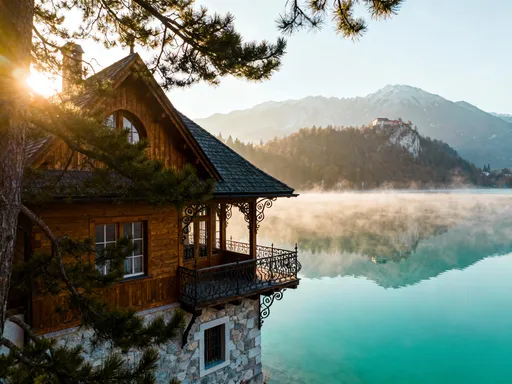
Scattered around the outskirts of Bled, nestled in meadows or perched on gentle slopes, stand traditional alpine farmhouses and rural dwellings that embody a centuries-old response to the region’s harsh winters and abundant natural resources. These structures are not merely picturesque—they are masterclasses in sustainable, climate-responsive design. Built primarily from larch wood and locally quarried stone, they showcase a deep understanding of materiality and environmental adaptation. Larch, known for its natural resistance to rot and insects, forms the backbone of walls, balconies, and shingled roofs, while stone foundations anchor the buildings against snow loads and seasonal shifts in the earth.
One of the most distinctive features of these homes is their steeply pitched roofs, often exceeding 45 degrees in incline. This design is not a stylistic choice but a practical necessity. The Julian Alps receive heavy snowfall each winter, and steep roofs allow snow to slide off naturally, preventing structural strain and roof collapse. Over time, these roofs develop a silvery patina as the wood weathers, blending seamlessly with the misty mornings and overcast skies. Eaves extend far beyond the walls, providing shelter for doorways and protecting wooden surfaces from rain, further extending the lifespan of the materials.
Color plays a quiet but meaningful role in these buildings. Shutters and window frames are painted in soft, earthy tones—moss green, faded red, and creamy yellow—colors derived from natural pigments and chosen to complement the landscape rather than dominate it. These hues are not regulated by law but maintained through cultural tradition, passed down through generations of builders and homeowners. Balconies, often enclosed with wooden latticework, serve both aesthetic and functional purposes: they provide sheltered outdoor space while allowing air circulation to prevent moisture buildup in wooden structures.
Inside, the layout follows a practical rhythm. The ground floor typically houses storage, livestock, or workshops, while living quarters occupy the upper levels, benefiting from better insulation and sunlight. Thick walls, sometimes over half a meter wide, provide thermal mass, keeping interiors cool in summer and warm in winter. Even today, many of these homes are inhabited year-round, a testament to their enduring functionality. This architectural vernacular is not frozen in time; it continues to inspire new construction, ensuring that the spirit of alpine resilience remains alive in Bled’s built environment.
Echoes of Empire: Austro-Hungarian Grandeur
As Bled evolved from a quiet alpine village into a sought-after European destination in the late 19th and early 20th centuries, its architecture began to reflect the tastes and ambitions of a cosmopolitan elite. Under the Austro-Hungarian Empire, Bled was transformed into a fashionable spa resort, attracting aristocrats, artists, and industrialists from Vienna, Budapest, and beyond. This era left an indelible mark on the town’s architectural identity, introducing a refined elegance that balanced grandeur with alpine modesty.
The villas and guesthouses built during this period are characterized by symmetrical facades, ornate cornices, and finely detailed woodwork. Bay windows, often wrapped in wrought iron railings, project from upper floors, offering panoramic views of the lake while adding visual depth to the streetscape. Facades are rendered in smooth plaster and painted in soft pastels—ivory, sage, and pale rose—colors that soften the formality of the classical proportions. Many of these buildings feature hipped roofs covered in clay tiles, a departure from the wooden shingles of rural homes, signaling a shift toward urban sophistication.
Interiors from this period reveal an appreciation for craftsmanship and comfort. Hardwood floors, coffered ceilings, and decorative moldings were standard, while large windows maximized natural light—a luxury in an age before electric lighting. Bathrooms, once a rarity, were carefully designed with imported tiles and porcelain fixtures, reflecting the growing emphasis on hygiene and leisure. Even today, some of these villas operate as boutique hotels or private residences, their interiors carefully restored to honor their original character.
One of the most enduring legacies of this period is the Grand Hotel Toplice, originally opened in 1912. Designed in the Art Nouveau style, it features flowing lines, floral motifs in ironwork, and a central atrium that floods the lobby with light. Its location directly on the lakefront made it a symbol of modern luxury, offering guests direct access to thermal baths and scenic promenades. The hotel’s survival through wars, political changes, and economic shifts speaks to Bled’s commitment to preserving its architectural heritage. Rather than demolish or radically alter such landmarks, the town has chosen restoration, ensuring that the echoes of empire remain audible in the rhythm of daily life.
Bled Castle: A Fortress Reimagined
Perched on a 130-meter cliff overlooking Lake Bled, Bled Castle is the town’s most visible architectural landmark—and one of its oldest. First mentioned in written records in 1011, the castle has undergone numerous transformations over the centuries, evolving from a medieval fortress into a cultural and culinary destination. Its current form is a palimpsest of architectural styles, reflecting the changing needs and tastes of its occupants. The thick defensive walls, narrow arrow slits, and commanding vantage point speak to its original military function, while later additions—such as the Baroque chapel and Renaissance arcades—reveal its adaptation to peacetime roles.
The castle’s layout follows a classic medieval concentric design, with outer walls enclosing an inner courtyard and key buildings arranged for both defense and domestic use. The Romanesque chapel, dedicated to Saint Mary, is one of the oldest surviving elements, featuring a simple nave, rounded arches, and a bell tower that still rings hourly. Though small in scale, the chapel’s proportions convey a sense of solemnity and permanence. In the 17th century, Baroque elements were added, including ornate altars and frescoed ceilings, blending spiritual grandeur with the artistic trends of the time.
In recent decades, the castle has been carefully restored to serve modern visitors without sacrificing historical authenticity. Today, it houses a museum that traces the region’s history, a restaurant that uses locally sourced ingredients, and a wine cellar that hosts tastings in vaulted stone chambers. The adaptation of space is thoughtful: former storage rooms now display artifacts, guard towers offer panoramic viewpoints, and the great hall hosts weddings and cultural events. These uses breathe life into the structure, transforming it from a static monument into a living part of the community.
Restoration efforts have prioritized material fidelity and structural integrity. Original stonework has been preserved wherever possible, and new repairs use matching limestone and traditional mortar techniques. Even the wooden bridges and staircases have been recreated using historical methods. Signage is discreet, and modern amenities are integrated with restraint, ensuring that the castle’s medieval essence remains intact. This balance between preservation and functionality sets a powerful example for heritage sites worldwide: history need not be frozen to be respected.
Sacred Geometry: The Church on the Island
At the heart of Lake Bled’s allure stands the Pilgrimage Church of Mary, Queen of Heaven, a small but profoundly impactful structure located on a tiny island accessible only by boat. Built on the site of earlier religious buildings dating back to the 9th century, the current church was largely constructed in the 17th century, blending Gothic foundations with Baroque embellishments. Its bell tower, rising 52 meters above the water, is perhaps the most photographed element, but the true magic lies in the building’s spatial harmony and symbolic design.
The church’s layout follows a simple cruciform plan, with a central nave, side chapels, and a polygonal apse. Proportions are carefully calibrated, creating a sense of balance that feels almost mathematical. Natural light filters through stained glass windows, casting colored patterns on the stone floor, especially during morning hours when the sun rises behind the eastern mountains. The acoustics within the nave are remarkable—sound carries with clarity and resonance, enhancing the impact of the church’s 99-step bell tower, where visitors climb to ring the famed wishing bell.
Inside, frescoes depict scenes from the life of the Virgin Mary, their pigments softened by time but still vibrant in their storytelling. Gilded altars and carved wooden pews reflect the Baroque love for ornamentation, yet the overall effect is not one of excess but of reverence. The isolation of the island amplifies the spiritual experience; surrounded by water, the church feels detached from the everyday world, a sanctuary suspended between earth and sky. This sense of separation is not accidental—it is a deliberate architectural and spiritual strategy, reinforcing the idea of pilgrimage as a journey of both body and soul.
Preservation of the church is an ongoing effort. Due to its location on an artificial island, the foundation is vulnerable to erosion and water pressure. Engineers and conservators have implemented subtle reinforcements beneath the surface, stabilizing the structure without altering its appearance. Regular maintenance ensures that the roof, stonework, and interior finishes remain in good condition, allowing future generations to experience the same awe that has drawn visitors for centuries. The church is more than a building; it is a testament to the enduring power of sacred space.
Modern Touches: Sustainable Design in Harmony
While Bled honors its past, it does not resist progress. In recent years, new architectural projects have demonstrated how contemporary design can coexist with historical sensitivity. The renovation of the Grand Hotel Toplice is a prime example. Originally an Art Nouveau landmark, the hotel underwent a major eco-friendly upgrade in the 2010s, incorporating energy-efficient systems, sustainable insulation, and locally sourced materials—all while preserving its historic façade and interior details. Solar panels were discreetly installed on service roofs, geothermal heating was introduced, and rainwater harvesting systems now support landscaping and non-potable uses.
Other new constructions in Bled follow strict design guidelines to ensure they blend with the landscape rather than dominate it. Buildings are limited in height, typically no more than three stories, to avoid obstructing views of the lake and mountains. Roofs are often sloped and covered with natural materials, such as clay tiles or green roofs planted with native vegetation, helping structures merge with the terrain. Facades use local stone, wood, and lime-based renders, avoiding synthetic materials that would clash with the town’s aesthetic.
One notable example is the Bled Information Center, a modest but innovative building that opened in the 2000s. Designed with passive solar principles, it features large south-facing windows for winter heat gain, overhangs to prevent summer overheating, and cross-ventilation for natural cooling. The interior uses recycled wood and low-VOC finishes, prioritizing indoor air quality and environmental responsibility. Despite its modern systems, the building’s appearance is unobtrusive, with a gabled roof and earth-toned exterior that echo traditional forms.
This commitment to sustainable design extends beyond individual buildings. The town has invested in pedestrian-friendly infrastructure, expanded cycling paths, and limited vehicle access in the historic core. Public lighting uses energy-efficient LEDs with warm color temperatures to minimize light pollution and preserve the night sky. These efforts reflect a broader philosophy: that progress should enhance, not erase, the qualities that make Bled special. Innovation is not about disruption, but about thoughtful integration.
Why It All Works: The Invisible Rules of Bled’s Aesthetic
The magic of Bled’s architecture lies not in any single building, but in the invisible framework that holds them all together. Behind the scenic beauty is a set of deliberate, often unwritten, principles that guide development and preservation. Urban planning policies enforce height restrictions, regulate building colors, and mandate the use of traditional materials, ensuring that no new construction disrupts the visual harmony of the town. These rules are not arbitrary; they are the product of decades of civic consensus, rooted in a shared respect for place and identity.
One of the most effective tools is the local building code, which requires new homes and renovations to align with regional architectural styles. While not prohibiting modern design, it encourages architects to reinterpret tradition rather than reject it. A contemporary house might use steel and glass, but its roofline will echo the steep pitch of alpine forms, and its exterior palette will mirror the natural surroundings. This approach prevents architectural dissonance, allowing innovation to flourish within a coherent visual language.
Equally important is the role of community stewardship. Residents take pride in maintaining their properties, not out of obligation, but out of love for their town. Garden walls are rebuilt with dry-stone techniques, historic windows are repaired rather than replaced, and public spaces are kept immaculate. This collective care creates a sense of continuity, where the past is not preserved in isolation, but lived alongside the present.
The result is a destination that feels authentic, not staged. Unlike some tourist towns that become theme-park versions of themselves, Bled retains the rhythm of daily life. Children walk to school past centuries-old churches, shopkeepers open wooden shutters each morning, and fishermen still launch their boats at dawn. Architecture here is not a backdrop for visitors—it is the foundation of a living culture. For travelers, this authenticity transforms a simple sightseeing trip into a meaningful experience. To walk through Bled is to witness how design, when guided by respect, sustainability, and soul, can elevate both place and people.