Chasing Light in Luxor: A Photographer’s Dream Unfolds
You know that golden hour glow you see in travel photos and think, No way that’s real? Well, in Luxor, Egypt, it is—and it hits different. I arrived with my camera and zero expectations, but within minutes, the Nile reflecting the soft dawn light stopped me cold. This isn’t just a destination; it’s a living canvas. For photographers, Luxor isn’t about snapping pictures—it’s about capturing moments where time, light, and history align perfectly. The air hums with antiquity, the sun paints stone in ever-changing hues, and every corner offers a composition waiting to be framed. Here, photography becomes more than documentation—it transforms into a quiet conversation with the past, guided by the most fleeting yet powerful force of all: light.
The First Glimpse: Arrival in Luxor and the Immediate Visual Impact
Stepping off the plane into the warm, dry air of Luxor, one is immediately struck by a sense of stepping into another era. The city rises from the eastern bank of the Nile like a mirage—modern buildings and bustling markets sit just a stone’s throw from colossal ancient temples that have stood for over 3,000 years. The skyline is dominated not by skyscrapers, but by the towering columns of Karnak Temple, their silhouettes cutting sharply against the pale morning sky. This juxtaposition—of everyday life unfolding beside monuments to pharaohs and gods—creates a visual tension that is both jarring and mesmerizing.
As the sun climbs, the light transforms the landscape. The golden hue of sandstone temples deepens, revealing intricate carvings that seem to awaken in the daylight. Dust motes dance in the beams that slice through temple gateways, illuminating hieroglyphs that once chronicled the lives of rulers long gone. The contrast between the vibrant chaos of street vendors, motorbikes, and children playing near temple walls, and the silent, solemn grandeur of the ruins, sets the tone for the entire photographic journey. It’s a reminder that Luxor is not a museum piece frozen in time—it’s a living, breathing city where history isn’t just preserved; it’s lived.
Photographers arriving in Luxor often find their first instinct is to raise their cameras toward the monumental. But it’s the interplay between old and new—the donkey cart passing beneath a 14th-century pylon, the laundry hanging from a balcony with the Temple of Luxor in the background—that offers some of the most compelling early shots. These contrasts invite deeper storytelling, where the viewer doesn’t just see ancient Egypt, but understands how its legacy continues to shape daily life. Capturing this duality requires patience and observation, but the rewards are immediate: images that are not only visually rich but emotionally resonant.
Sunrise at Karnak Temple: Mastering Light and Scale
There is a particular magic to being the first person through the gates of Karnak Temple as the sun begins to rise. The vast complex, which spans over 200 acres and is the largest religious building ever constructed, feels almost private in those quiet morning hours. The air is still, the light is soft, and the towering columns of the Great Hypostyle Hall rise like ancient sentinels wrapped in shadow. This is when photography becomes both a technical challenge and a deeply personal experience.
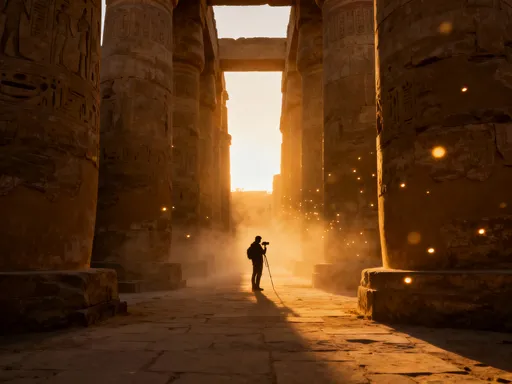
The early light at Karnak does something remarkable—it reveals texture. The hieroglyphs, worn by centuries of wind and sand, come alive as low-angle sunlight skims across the stone, casting delicate shadows that accentuate every carved line. Beams of light slice through the narrow corridors between columns, creating natural spotlights that guide the eye and frame the composition. For photographers, this is prime time: the contrast is manageable, the colors are warm but not over-saturated, and the crowds have yet to arrive.
To make the most of this moment, wide-angle lenses are essential for capturing the sheer scale of the temple, while telephoto lenses allow for intimate details—cracks in the stone, a bird perched atop a capital, or the play of light on a weathered relief. A tripod helps stabilize long exposures in dimly lit halls, and polarizing filters can reduce glare on reflective stone surfaces. But beyond gear, the real skill lies in patience—waiting for the perfect alignment of light and shadow, or for a lone figure to walk through a columned alley, adding scale and narrative to the frame.
The emotional impact of photographing Karnak at sunrise cannot be overstated. Standing beneath columns that are over 30 feet tall, knowing they were built without modern tools or machinery, instills a sense of humility. The silence—broken only by the distant call to prayer or the rustle of a desert fox—amplifies the feeling of being present at something sacred. For many photographers, this is not just about capturing a beautiful image; it’s about bearing witness to human achievement on a monumental scale, illuminated by nature’s most gentle light.
Nile Reflections: Capturing Symmetry and Serenity from the River
One of the most poetic perspectives in Luxor is found not on land, but on the water. The Nile, Egypt’s lifeline for millennia, offers a unique vantage point for photography—calm, reflective, and endlessly serene. At golden hour, when the sun dips low and bathes the city in amber light, the river becomes a mirror, doubling the beauty of the temples and cliffs that line its banks. This is the time to board a traditional felucca, a graceful wooden sailboat that glides silently across the surface, allowing photographers to capture images of rare symmetry and stillness.
From the river, Luxor Temple takes on a new character. Illuminated at night, its façade glows against the darkening sky, its reflection shimmering in the water like a dream. Even during the day, the interplay of light and shadow on the temple’s columns creates patterns that repeat flawlessly in the river’s surface. To capture this effect, a slower shutter speed—around 1/15th of a second or longer—can enhance the mirror-like quality, especially when the water is undisturbed. A polarizing filter helps reduce surface glare, while a neutral density filter allows for longer exposures even in brighter light.
Composition becomes a game of balance: the vertical lines of the temple pitted against the horizontal calm of the river, the warm tones of stone contrasting with the cool blues of twilight water. Shooting from a low angle on the felucca emphasizes the reflection, making it the dominant element of the frame. Including the sail or the silhouette of the boatman adds a human touch without disrupting the tranquility.
This perspective offers a counterpoint to the grandeur of daytime temple visits. Where the land-based experience is one of scale and awe, the river offers intimacy and contemplation. It’s here that photographers often find their most meditative shots—images that don’t shout, but whisper. The Nile, in this way, becomes more than a backdrop; it becomes a co-author of the visual story, reflecting not just stone and sky, but the quiet reverence that Luxor inspires.
West Bank Wonders: Thebes’ Tombs and Temples Through a Lens
Across the Nile, the West Bank unfolds like a vast open-air museum of ancient burial art and architecture. This is the domain of the dead, where pharaohs and nobles were laid to rest in hidden tombs carved into the limestone cliffs. The Valley of the Kings, the mortuary temple of Hatshepsut, and the Colossi of Memnon are not just archaeological sites—they are masterclasses in color, design, and preservation. For photographers, this area presents both extraordinary opportunities and unique challenges.
Inside the tombs, lighting is strictly controlled to protect the fragile pigments that have survived for over 3,000 years. Flash photography is prohibited, and visitors are often given small flashlights or allowed to use low-light lamps. This means photographers must rely on high ISO settings, wide apertures, and steady hands—or tripods, where permitted. The challenge is to capture the vivid scenes of the afterlife, the gods guiding the soul, and the intricate details of headdresses and jewelry, all in dim, uneven light.
Yet, this limitation often leads to more thoughtful photography. Without the ability to flood a scene with artificial light, the photographer must wait, observe, and compose with care. Sometimes, a single beam from a visitor’s flashlight will illuminate a god’s eye or a hieroglyphic cartouche, creating a dramatic, almost theatrical effect. These moments—fleeting and unpredictable—are often the most powerful.
Outside, the landscape tells another story. The stark, sun-baked desert contrasts sharply with the cool, colorful interiors of the tombs. Wide-angle shots of the Valley of the Kings emphasize the isolation and secrecy of the site, with narrow pathways winding between rock faces. Meanwhile, Hatshepsut’s temple—built into the cliffs in a series of terraces—offers clean lines, strong geometry, and dramatic shadows that shift throughout the day. Early morning and late afternoon provide the best light for capturing its elegant symmetry and connection to the natural rock.
Understanding the historical context of these sites deepens the photographic experience. Knowing that these tombs were designed not just as graves but as gateways to the afterlife adds a layer of meaning to every image. Photographers who take the time to learn the stories behind the art often return with images that are not just visually stunning, but narratively rich.
Street Scenes and Local Life: Human Elements That Elevate Travel Photography
While the monuments of Luxor are undeniably majestic, some of the most enduring images come from the city’s streets. Beyond the temple gates, life unfolds in vibrant, unscripted moments—vendors arranging pyramids of spices in the souk, farmers guiding donkeys laden with crops, children chasing each other past ancient pylons. These scenes, rich with color, movement, and emotion, add warmth and authenticity to any photographic collection.
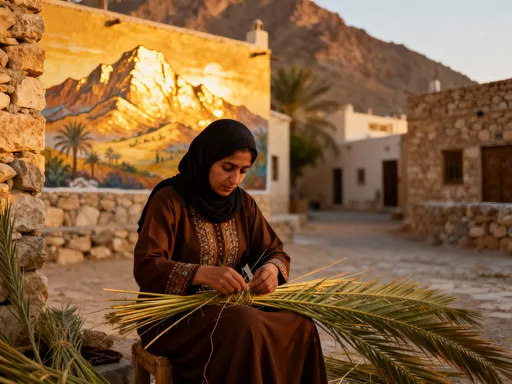
Photographing people in Luxor requires sensitivity and respect. Many locals are accustomed to tourists, but not all welcome being photographed. A simple smile, a nod, or a quiet request in broken Arabic—is it okay to take a photo?—goes a long way. When permission is granted, the resulting images feel more genuine, more connected. A vendor pausing to adjust his turban, a grandmother watching her grandchildren play, a craftsman sanding a wooden scarab—these are the moments that tell the story of modern Luxor.
Natural light plays a crucial role in these portraits. The soft, diffused light of early morning or late afternoon flatters skin tones and minimizes harsh shadows. Simple backgrounds—adobe walls, shaded doorways, or the muted colors of a market stall—help keep the focus on the subject. A 50mm prime lens is ideal for street photography, offering a natural field of view and excellent low-light performance.
These human-centered images balance the grandeur of the ancient world with the vitality of the present. They remind us that Luxor is not just a relic of the past, but a thriving community that has lived beside these monuments for generations. Including these moments in a photo essay creates a fuller, more compassionate narrative—one that honors both history and humanity.
Sunset at the Theban Necropolis: Drama in Dust and Light
As the sun begins its descent behind the Theban Hills, the West Bank undergoes a transformation. The golden light of late afternoon deepens into a rich, honeyed amber, bathing the necropolis in a glow that feels almost sacred. Dust particles suspended in the air scatter the light, creating a soft, hazy atmosphere that blurs the edges of stone and sky. This is the hour when photography becomes poetry—when every shadow stretches long, every contour is emphasized, and the entire landscape seems to breathe with quiet majesty.
The Colossi of Memnon, two massive stone statues of Pharaoh Amenhotep III, stand like sentinels in the fading light. Once part of a vast mortuary temple, they now preside over the plain in silent dignity. Shot from a low angle, they appear even more imposing, their faces half-lit, their backs cloaked in shadow. A slight haze in the air enhances the sense of mystery, making them seem less like statues and more like guardians of time itself.
For panoramic views, elevated vantage points near the edge of the valley offer sweeping perspectives of the entire necropolis. As the sun dips below the horizon, the contrast between light and dark intensifies, creating ideal conditions for silhouette photography. A lone figure walking toward a tomb entrance, a camel caravan crossing the plain, or the jagged outline of the cliffs against a fiery sky—all become powerful visual metaphors for journey, solitude, and eternity.
Long exposures during this time can capture the subtle movement of clouds or the fading trail of a bird in flight. Using a tripod and a remote shutter release helps avoid camera shake, while bracketing exposures ensures that highlight and shadow details are preserved. But beyond technique, this hour demands stillness. It’s a time to put the camera down occasionally, to simply observe, to feel the weight of millennia in the silence. The best photographs often come not from rushing, but from waiting—letting the light settle, letting the moment unfold.
From Snapshots to Stories: Editing, Selecting, and Sharing Your Luxor Journey
Back home, surrounded by hundreds of images from Luxor, the real work begins. The first step is culling—sifting through the shots to find the ones that truly capture the essence of the journey. It’s tempting to keep everything, but a strong photo essay relies on quality, not quantity. The best images are those that combine technical precision with emotional depth: a perfectly exposed temple column, yes, but also the one where a shaft of light falls just so, or where a child’s hand reaches toward an ancient carving.
Editing should be done with restraint. Luxor’s colors are already rich—over-saturating can make them look artificial. Adjusting contrast, clarity, and white balance can enhance the mood without distorting reality. Black-and-white conversions work well for dramatic shots—sunrise at Karnak, silhouettes at sunset—where texture and form matter more than color.
Curating a collection means grouping images thematically: light, scale, people, silence. A sequence might begin with a wide shot of the Nile at dawn, move to a close-up of a hieroglyph, then transition to a portrait of a local artisan, and end with a lone column standing against a twilight sky. This narrative arc invites viewers not just to see Luxor, but to feel it.
Sharing these images—whether in a personal album, a blog, or a gallery—should be an act of storytelling. The caption is as important as the photo. Instead of simply naming a location, describe the moment: The air was still as the first light touched the columns of Karnak, or This child smiled as she passed the temple gate, unaware she was walking through history. The goal is not just to display beauty, but to convey presence.
Why Luxor Stays in Your Frame—and Your Heart
Luxor is more than a destination for photographers—it is a masterclass in light, time, and perspective. Every sunrise over the Nile, every shadow stretching across ancient stone, every quiet moment in a dimly lit tomb contributes to a deeper understanding of what it means to witness history. The city does not merely offer beautiful backdrops; it invites a kind of visual meditation, where the act of photographing becomes a form of reverence.
What lingers long after the trip is not just the images, but the feeling—the stillness at dawn, the warmth of golden hour, the hum of life continuing beside ruins that have seen empires rise and fall. Luxor teaches photographers to slow down, to look closely, to see not just with their eyes, but with their hearts. It reminds us that the most powerful photographs are not those that capture perfection, but those that capture presence.
For the women who travel here—many balancing family, responsibility, and personal dreams—Luxor offers a rare gift: a chance to step outside the everyday and reconnect with wonder. It is a place where creativity is reignited, where curiosity is rewarded, and where the simple act of seeing something beautiful can feel like a quiet act of courage.
So go with your camera, yes—but also with an open mind and a willing heart. Let Luxor unfold in its own time. Chase the light, but also pause in the shadows. Capture the monuments, but don’t forget the people. And when you return, carry not just photos, but a renewed sense of what it means to truly see. Because in Luxor, every frame tells a story—and every story has the power to change the one who tells it.