You Won’t Believe These Secret Festivals in Sardinia
Have you ever dreamed of celebrating like a local, far from tourist crowds? In Sardinia, hidden festivals pulse with ancient traditions, wild music, and soul-deep energy. I stumbled upon one by accident—and it changed how I see travel. These aren’t shows for visitors; they’re real, raw, and deeply rooted in island life. Let me take you where guidebooks don’t, to the heart of Sardinia’s best-kept secrets. This is not about curated experiences or staged performances. This is about stepping into a rhythm older than memory, where every drumbeat echoes a thousand years, and every masked face holds a story passed from grandparent to child. Here, celebration is not entertainment—it is survival, identity, and devotion woven into the fabric of daily life.
The Pulse of Sardinia: Why Its Hidden Festivals Stand Apart
Sardinia is unlike any other region in Italy. Isolated by the Tyrrhenian Sea and shaped by millennia of independence, the island has preserved a culture that feels both timeless and defiantly distinct. While mainland Italy hums with Renaissance art and Roman ruins, Sardinia speaks in whispers of the Nuragic civilization—a Bronze Age people who built towering stone towers called nuraghi that still dot the landscape like silent sentinels. This deep-rooted sense of separateness is not just historical; it lives on in the island’s festivals, where ancient rituals are not reenactments but living traditions. These events are not designed for Instagram. They are not scheduled for the convenience of tourists. They are part of a calendar that has turned for centuries, long before travel blogs existed.
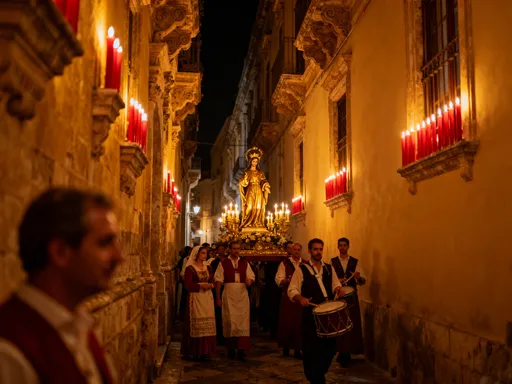
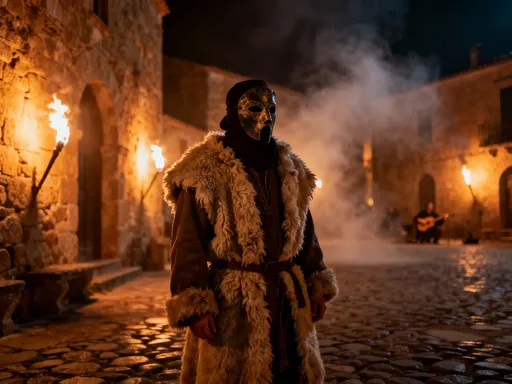
What makes Sardinia’s festivals so different is their authenticity. In many parts of Europe, traditional celebrations have been polished into spectacles—colorful, yes, but often stripped of meaning. Not here. In villages tucked into the island’s rugged interior, festivals unfold with a gravity that borders on the sacred. Imagine walking through a hillside town at dusk and hearing the low thud of goat-hide drums echoing through narrow stone alleys. Torches flicker on stone walls. Figures in handwoven wool capes move silently, their faces hidden beneath wooden masks carved with solemn, otherworldly expressions. There is no announcer, no program, no crowd of onlookers snapping photos. This is not a performance. It is a rite.
The island’s geographic isolation has helped protect these customs. Cut off from easy access, many Sardinian villages remained self-sufficient for generations, their lives governed by agriculture, shepherding, and the Catholic liturgical calendar—blended seamlessly with older, pre-Christian beliefs. The festivals reflect this fusion. A procession honoring a saint might include symbols that once represented fertility gods or sun worship. A horseback parade could reenact a medieval battle or a mythic struggle between light and darkness. The meaning is layered, passed down orally, and rarely explained to outsiders. To witness one of these events is to stand at the edge of a world that insists on its own terms.
Cagliari’s Holy Week: A Quiet Fire of Tradition
Even in Sardinia’s capital, Cagliari, the sacred rhythms of tradition run deep. During Holy Week, particularly on Good Friday, the city transforms in ways that surprise even seasoned travelers. While other Italian cities host grand, theatrical processions, Cagliari’s observances are marked by restraint, silence, and emotional intensity. The most powerful moment comes with the *processione del Cristo Velato*—the procession of the Veiled Christ. As night falls, members of ancient religious brotherhoods, known as *confraternite*, emerge from dimly lit churches. Cloaked in black robes and wearing pointed hoods that obscure their faces, they move in solemn formation through the old town of Castello.
The air is thick with the scent of burning beeswax from the tall candles they carry. The only sounds are the rhythmic tapping of a wooden staff on cobblestones and the occasional muffled chant. There is no music, no fanfare. The atmosphere is one of collective mourning, a shared act of remembrance that transcends individual grief. Locals line the narrow streets in silence, some with hands clasped, others wiping tears. Children are hushed. Even tourists, if present, tend to stand back, sensing the gravity of the moment.
One of the most moving aspects of these rites is how fiercely they are protected by the community. While visitors are not turned away, there is an unspoken understanding that this is not a spectacle. Photography is rare and often discouraged. The focus is on participation, not observation. Another significant event is *Sa Die de sa Sardigna* (Sardinia Day), celebrated on April 28th, which commemorates a historic uprising against feudal rule. On this day, Cagliari becomes a stage for Sardinian pride—flags wave, traditional music fills the air, and speeches honor the island’s struggle for autonomy. But even here, the tone remains dignified, rooted in history rather than nationalism.
For the traveler, experiencing Holy Week in Cagliari is not about entertainment. It is about bearing witness. It is a reminder that some of the most powerful cultural moments are not loud or flashy, but quiet, solemn, and deeply felt. To walk behind the procession, even as a silent observer, is to feel the weight of time, faith, and collective memory pressing gently against your chest.
Sartène’s “Black Village” Rituals: When Ancestors Walk the Streets
If Cagliari’s traditions are solemn, those of Sartène—often called the “black village” for its dark stone buildings and deep-rooted customs—are nothing short of primal. The town, nestled in the mountainous interior, is the heart of one of Sardinia’s most mysterious festivals: the *Carnevale de Sant’Antiocu*. Held in February, this event defies easy categorization. It is not a carnival in the modern sense—there are no floats, no glitter, no dancing in the streets for joy. Instead, it is a ritual battle, a symbolic reenactment of ancient conflicts between good and evil, order and chaos, the living and the dead.
At dawn, men from the village don sheepskin tunics, leather belts, and heavy wooden masks with hollow eyes and grimacing mouths. These are the *Mamuthones* and *Issohadores*, figures that date back to pre-Roman times. The Mamuthones wear dark, hunched costumes adorned with cowbells that clang with every step, creating a hypnotic, almost funereal rhythm. The Issohadores, dressed in red and black, carry long ropes and play the role of hunters or shepherds trying to control the wild spirits.
Through the day, the masked men parade through the village, moving in slow, deliberate steps. The bells never stop. At times, the Issohadores pretend to lasso the Mamuthones, dragging them through the streets in a ritual that some scholars believe symbolizes the taming of winter or the containment of malevolent forces. There are no scripts, no choreography—just instinct, memory, and the unspoken rules passed down through generations.
What makes this festival so extraordinary is its resistance to tourism. Unlike other cultural events that have opened their doors to visitors, *Sant’Antiocu* remains largely closed to outsiders. Many rituals take place in private courtyards or at night, away from prying eyes. Locals speak of the event in hushed tones, not out of secrecy, but out of respect. They do not perform for an audience. They live the ritual. To be invited to witness even a small part of it is considered a rare honor—one that requires humility, discretion, and an understanding that you are a guest in someone else’s spiritual world.
The Horse Festivals of Barbagia: Power, Pride, and Pageantry
In the central highlands of Sardinia, in a region known as Barbagia, horses are not just animals—they are symbols of strength, freedom, and cultural endurance. Here, in villages like Orani, Mamoiada, and Gavoi, equestrian festivals are among the most vibrant expressions of local identity. One of the most renowned events is *Autunno in Barbagia* (Autumn in Barbagia), a seasonal celebration that takes place across dozens of towns from September to November. Each village hosts its own version, often centered around food, craft, and, most importantly, horses.
Imagine a crisp autumn morning in Orani. The air is sharp with the scent of woodsmoke and roasting chestnuts. Suddenly, the sound of hooves echoes through the narrow streets. Riders appear, dressed in traditional attire—dark wool pants, embroidered vests, and wide-brimmed hats. Their horses, strong and sure-footed Sardinian breeds, prance with pride as they parade through the village square. The riders do not wave or smile for the crowd. Their expressions are serious, focused. This is not a show. It is a display of skill, heritage, and respect for the animal that has shaped rural life for centuries.
After the parade, the real celebration begins. Women in long, hand-stitched dresses offer glasses of local red wine in clay cups. Artisans display handmade leather saddles, woven baskets, and intricate silver jewelry. Children watch wide-eyed as elders demonstrate ancient horsemanship techniques—how to guide a horse with subtle shifts in weight, how to leap onto its back at full gallop. These moments are not staged. They are part of a living tradition, one that is being carefully preserved by younger generations who see in these festivals a connection to their roots.
The horse, in Sardinian culture, is more than a means of transport. It represents independence, resilience, and the untamed spirit of the island. In a world where rural life is fading, these festivals are acts of resistance—a way of saying, “We are still here. Our ways still matter.” For visitors, attending one of these events is not just about seeing something unique. It is about understanding a way of life that values patience, craftsmanship, and harmony with the land.
Music from Another Time: Launeddas and Sacred Chants
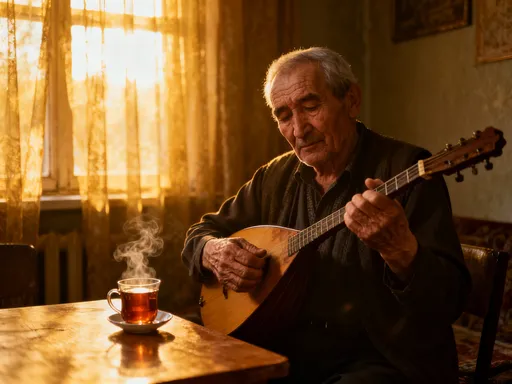
If the festivals of Sardinia have a soul, it is carried in their music. This is not music as entertainment, but as invocation, as prayer, as memory made audible. The most iconic instrument is the *launeddas*—a triple-pipe woodwind instrument that has been played on the island for over 2,000 years. Made from reeds and often passed down within families, the launeddas produce a haunting, droning sound that seems to rise from the earth itself. Skilled players can sustain a continuous melody using circular breathing, creating a sound that feels both ancient and eternal.
In villages like Bitti and Orgosolo, polyphonic singing—known as *cantu a tenore*—is another treasure. This form of male choral singing features four voices: one carries the melody, while the others produce rhythmic, guttural harmonies that mimic the sounds of nature—wind, water, animal calls. UNESCO has recognized *cantu a tenore* as an Intangible Cultural Heritage of Humanity, not just for its beauty, but for its role in preserving Sardinian language and identity.
I remember one night, deep in the hills near Fonni, being led to a small stone church by a local farmer. Inside, by candlelight, four men began to sing. There was no audience. No microphones. Just the raw, resonant voices filling the cold stone space. I stood at the back, barely breathing, feeling the vibrations in my chest. It was not a concert. It was a ritual. The songs told stories of shepherds, of lost love, of the sea. They were sung in Logudorese, a Sardinian dialect few outsiders understand, but the emotion needed no translation.
Drum circles, too, play a vital role, especially during festivals. In some villages, drummers gather at midnight and play for hours, their rhythms syncing with the heartbeat of the community. These sounds are not meant to be recorded or shared online. They are meant to be felt, to bind people together in a moment of collective presence. To hear them is to be reminded that music, at its core, is not about fame or profit—it is about connection.
How to Experience These Festivals the Right Way
So how can a traveler experience these wonders without becoming a disruption? The answer lies not in convenience, but in respect. The first step is timing. Most of Sardinia’s hidden festivals take place in spring and autumn—April through June and September through November. Holy Week events are concentrated in March or April, depending on the lunar calendar. Autumn festivals like *Autunno in Barbagia* unfold on rotating weekends from September to December, with each village hosting on a different date.
Finding exact dates requires patience. These events are rarely listed on international travel sites. Instead, check the official tourism websites of Sardinia’s provinces—such as Nuoro, Ogliastra, or Sud Sardegna—or contact local *pro loco* associations, which are community-based tourism groups. Calling a small hotel or agriturismo in the region and asking the owner is often more effective than searching online.
When it comes to accommodation, avoid large resorts. Opt for family-run agriturismi—farm stays that offer home-cooked meals and local insight. Staying in a small village increases your chances of being invited to peripheral events or informal gatherings. It also shows that you are not just passing through, but making an effort to connect.
Cultural etiquette is non-negotiable. Dress modestly, especially during religious events. Avoid bright colors or revealing clothing. Never use flash photography during rituals—many consider it disrespectful or even offensive. Ask permission before taking any photos. Do not interrupt processions or try to join in unless invited. These are not participatory theme parks. They are sacred moments in the lives of real people.
Most importantly, go with humility. Do not expect explanations. Do not demand access. Be present. Be quiet. Be grateful. The deepest experiences often come not from what you see, but from what you feel—the weight of silence, the warmth of a shared cup of wine, the unspoken nod of a local who sees that you are trying to understand.
Beyond the Party: Why These Moments Matter
In an age of fast travel and instant gratification, the festivals of Sardinia offer something rare: depth. They remind us that culture is not a product to be consumed, but a living, breathing entity to be honored. To witness a masked procession at dawn, to hear a midnight chant in a hillside church, to stand among villagers as they honor a centuries-old rite—is to touch something fundamental in the human experience.
These festivals matter because they resist homogenization. In a world where traditions are often diluted for mass appeal, Sardinia holds fast. Its people do not perform for clicks or likes. They celebrate because it is who they are. They preserve because forgetting would mean losing a part of themselves. And in doing so, they offer the rest of us a mirror—a chance to reflect on what we have sacrificed in the name of progress.
There is a growing hunger for authenticity. People are tired of curated feeds and staged experiences. They want to feel something real. The hidden festivals of Sardinia answer that call. They do not promise comfort or convenience. They promise truth. They invite us to slow down, to listen, to be present. They teach us that the most meaningful journeys are not about how many places we see, but about how deeply we see them.
So seek not just sights, but soul. Travel slower. Listen deeper. Learn the names of the villages, the rhythms of the drums, the meaning behind the masks. Find the festivals no one’s talking about—but everyone should. Because in their quiet power, in their unbroken continuity, they offer a rare gift: a glimpse of a world that has not forgotten how to remember.