Whispers of Culture: Fujairah’s Hidden Art Soul
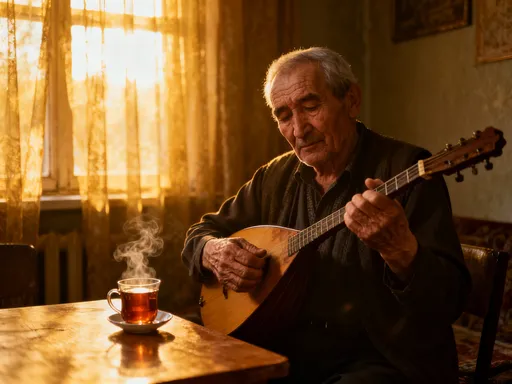
Nestled along the Gulf of Oman, Fujairah reveals a side of the UAE few travelers ever see—not skyscrapers or malls, but ancient fort walls echoing with poetry, mountain villages alive with color, and quiet galleries where tradition meets modern expression. I went seeking peace and found a cultural heartbeat pulsing beneath the surface. This is not the Dubai narrative; this is authenticity carved in stone, woven in textiles, and painted in whispers. Here, heritage is not preserved behind glass but lived in daily rhythms, from the clink of copper bowls in a village kitchen to the hum of a lute in a wadi at dusk. Fujairah invites those willing to listen closely, to step beyond spectacle and into the quiet dignity of a culture that speaks softly but carries deep roots.
Beyond the Expected: Discovering Fujairah’s Cultural Identity
Fujairah occupies a unique place within the United Arab Emirates, both geographically and culturally. Situated on the eastern coast along the Gulf of Oman, it is the only emirate not bordering the Persian Gulf, giving it a distinct climate, landscape, and historical trajectory. While much of the UAE has transformed rapidly into a global hub of commerce and tourism, Fujairah has chosen a different path—one of preservation, introspection, and cultural continuity. Its relative isolation, nestled between the Hajar Mountains and the sea, has acted as a natural buffer against the pressures of mass tourism and urban sprawl, allowing its traditions to endure with remarkable integrity.
What defines Fujairah’s cultural identity is not a single monument or festival, but a collective spirit rooted in resilience, community, and reverence for the past. Unlike the gleaming towers of Abu Dhabi or Dubai, Fujairah’s skyline is shaped by rugged peaks and centuries-old stone structures. The emirate’s people speak with a dialect that carries the inflections of ancient Bedouin and coastal seafaring tribes, and their customs reflect a way of life shaped by agriculture, fishing, and tribal cohesion. This cultural authenticity is not performative; it is embedded in the fabric of everyday existence, from the morning call to prayer echoing through mountain valleys to the shared meals in family majlises where stories are passed down like heirlooms.
Yet Fujairah is not frozen in time. It is a living culture, one that evolves without losing its essence. The emirate has embraced modern infrastructure—paved roads, schools, healthcare—but without sacrificing its soul. Visitors who come expecting a replica of the UAE’s more famous destinations are often surprised, even humbled, by what they find: a place where silence is valued, where hospitality is offered freely, and where art and tradition are not commodified but cherished. This balance between progress and preservation is Fujairah’s quiet triumph, a model of cultural sustainability in an era of rapid change.
Fujairah Fort: Where History Breathes Through Stone
At the heart of Fujairah’s cultural landscape stands the 16th-century Fujairah Fort, a sentinel of history perched on a rocky outcrop overlooking the town and the sea. Built from coral stone, lime, and gypsum—a testament to traditional Emirati architecture—the fort is one of the oldest and best-preserved in the UAE. Unlike reconstructed landmarks that serve primarily as tourist attractions, this fort has been carefully restored with respect for its original purpose and design, allowing visitors to experience history not as a distant memory but as a tangible presence. Its thick walls, narrow passageways, and elevated watchtowers speak of a time when defense, tribal leadership, and community life were inseparable.
Inside, the fort functions as a museum that tells the story of Fujairah’s people with dignity and depth. Exhibits display artifacts recovered from archaeological sites across the emirate, including traditional weapons like daggers and rifles, handwoven textiles, and domestic tools used in daily life. Photographs and oral histories document the lives of elders who remember a time before electricity and paved roads, offering a rare glimpse into the emirate’s social evolution. What sets this museum apart is its lack of theatricality; there are no dramatic soundscapes or digital reconstructions. Instead, the power lies in simplicity—the quiet dignity of objects that once belonged to real people, whose lives were shaped by the land, the sea, and each other.
The fort’s significance extends beyond its physical structure. It is a symbol of continuity, a place where the past is not buried but honored. Local families often bring children to visit, using the space as an informal classroom where history is taught through storytelling rather than textbooks. Community events, such as poetry readings and heritage days, are held within its walls, reinforcing its role as a living cultural center. In a world where heritage sites are often sanitized for mass appeal, Fujairah Fort stands as a rare example of authenticity—maintained not by government mandate alone, but by the pride and participation of the people who call this place home.
Mountain Murals and Village Craft: Art in the Hajar Foothills
As one travels inland from the coast into the foothills of the Hajar Mountains, the landscape shifts from turquoise waters to terraced slopes and stone villages where art is not confined to galleries but woven into the very fabric of daily life. In villages like Al Badiyah, Dibba, and Khor Fakkan, creativity emerges in subtle, organic forms—hand-painted signs in bold calligraphy, geometric patterns etched into doorways, and murals that depict scenes of fishing, farming, and family. These are not commissioned works for tourists but spontaneous expressions of identity, created by residents who see beauty as an essential part of their environment.
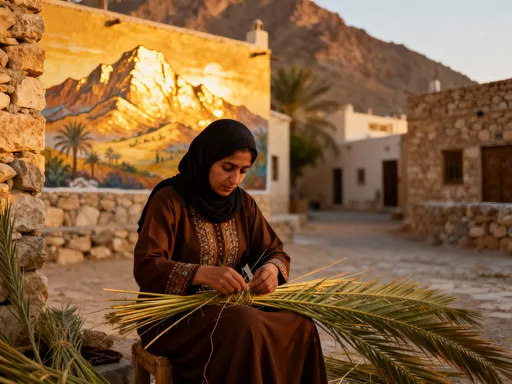
Equally significant is the craft tradition preserved by local women’s cooperatives. In quiet workshops tucked behind family homes, women gather to practice skills passed down through generations: weaving palm fronds into baskets and mats, dyeing cloth with natural pigments like indigo and saffron, and transforming utilitarian objects—such as date-pressing trays—into intricate works of art. These crafts are more than decorative; they are acts of cultural preservation. Each woven pattern, each dyed thread, carries meaning—symbols of protection, fertility, or tribal affiliation that connect the present to the past.
What makes these artistic practices remarkable is their resistance to commercialization. While similar crafts in other regions have been adapted for mass production and souvenirs, Fujairah’s artisans maintain their integrity by producing in small quantities and using traditional methods. Visitors are welcomed to observe and even participate in workshops, but the emphasis is on respect and understanding rather than transaction. This approach ensures that the art remains rooted in its cultural context, serving the community first and the market second. In a world where global aesthetics often erase local distinctions, Fujairah’s village art stands as a quiet act of resistance—a declaration that culture is not something to be sold, but lived.
The Rise of Grassroots Galleries and Cultural Hubs
In recent years, Fujairah has seen the emergence of a vibrant, community-driven art scene that operates outside the commercial gallery model. Small, independent spaces—often converted homes or repurposed buildings—now serve as cultural hubs where Emirati artists can exhibit their work without compromising their vision. These grassroots galleries are modest in scale but rich in meaning, hosting rotating exhibitions of painting, calligraphy, sculpture, and mixed media that explore themes of identity, memory, and the natural world. Unlike the high-profile art districts of larger cities, these spaces prioritize accessibility and authenticity, fostering intimate connections between artists and audiences.
One of the most significant developments in this movement is the annual Fujairah Arts Festival, a month-long celebration that transforms the emirate into an open-air gallery. Streets, parks, and public squares become venues for live painting, sculpture installations, and performance art. Local schools participate, with students creating murals that reflect their vision of Fujairah’s future. The festival is not curated by international consultants or commercial sponsors; it is organized by artists, educators, and community leaders who believe in art as a public good. This bottom-up approach ensures that the festival remains true to its roots, celebrating local talent without external pressure to conform to global trends.
These cultural initiatives do more than showcase art—they create space for dialogue. In a region where contemporary artistic expression can sometimes be overshadowed by tradition, Fujairah offers a rare balance. Artists are not asked to choose between heritage and innovation; instead, they are encouraged to weave the two together. A calligrapher might blend classical Arabic script with abstract forms, or a sculptor might use reclaimed stone from old buildings to create modern installations. This synthesis of old and new reflects the emirate’s broader cultural philosophy: that tradition is not a relic to be preserved in isolation, but a living force that can inspire and evolve.
Traditional Music and Oral Heritage: Echoes in the Valley
Music in Fujairah is not entertainment; it is memory. In village squares, wadis, and family gatherings, the rhythms of al-razfa and fann at-tanbura continue to resonate, carrying stories of seafaring, desert journeys, and tribal unity. Al-razfa, a traditional performance involving synchronized drumming, chanting, and sword dancing, is often performed at weddings and national celebrations, uniting participants in a shared expression of strength and solidarity. Fann at-tanbura, rooted in East African and Arabian influences, features the tanbura lyre and call-and-response vocals, evoking the maritime history of the coastal communities. These musical forms are not staged for tourists but preserved as integral parts of social life.
Recognizing the fragility of these oral traditions, cultural organizations and local historians have undertaken efforts to document and revitalize them. Audio and video recordings of elders performing songs and reciting poetry are being archived, ensuring that future generations can access this intangible heritage. Workshops for youth teach the rhythms, lyrics, and meanings behind the music, emphasizing not just technique but context. A young drummer learning al-razfa is also taught the historical events the performance commemorates, creating a deeper connection to identity.
The power of this music lies in its ability to bind people across time. When a group of men chant in unison, their voices echoing through a mountain pass, they are not merely performing—they are participating in a lineage. The same songs that once accompanied pearl divers returning to shore are now sung at school events and cultural festivals, adapting to new contexts without losing their essence. In a world where digital media dominates, Fujairah’s commitment to oral heritage is a quiet rebellion—a reminder that some truths are best carried by the human voice, passed from ear to ear, heart to heart.
Culinary Culture: Flavor as Heritage
To taste Fujairah is to understand it. The emirate’s cuisine is a direct reflection of its geography and history—coastal villages rely on fresh fish like hammour and kingfish, while mountain communities cultivate limes, pomegranates, and dates. These ingredients are not merely sustenance; they are symbols of resilience and generosity. Traditional dishes such as harees—a slow-cooked porridge of wheat and meat—and luqaimat—sweet, deep-fried dumplings drizzled with date syrup—are more than recipes; they are culinary heirlooms, prepared with patience and shared during gatherings that reinforce social bonds.
Food in Fujairah is deeply tied to ritual and community. During Eid and other celebrations, families open their homes to neighbors, serving meals in the majlis, the traditional sitting area where conversation flows as freely as tea. Cooking is often a collective effort, with elders guiding younger relatives through each step, from pounding spices to timing the simmer. These moments are not just about feeding the body but nurturing relationships and passing down values—hospitality, gratitude, and the importance of gathering around a shared table.
In recent years, culinary workshops have emerged as a way to preserve this heritage. Led by local women and chefs, these sessions teach visitors and younger Emiratis how to prepare traditional dishes while explaining their cultural significance. A simple dish like machboos, a spiced rice and meat preparation, becomes a lesson in trade history, as the spices used—saffron, cardamom, cinnamon—trace the emirate’s ancient connections to India, Persia, and East Africa. By framing food as both art and history, Fujairah ensures that its culinary traditions remain vibrant, not relegated to museum menus or tourist shows.
How to Experience Fujairah Authentically: A Thoughtful Traveler’s Guide
To visit Fujairah is to be invited into a culture that does not perform for outsiders but welcomes those who come with respect and curiosity. The most meaningful experiences here are not found in guidebooks but in moments of genuine connection—sharing tea with a family in a mountain village, listening to a fisherman recount tales of the sea, or watching a potter shape clay using techniques unchanged for centuries. The key to accessing these moments lies in slowing down, observing, and approaching the emirate not as a destination but as a living community.
Travelers are encouraged to stay in family-run guesthouses or eco-lodges rather than large resorts. These accommodations offer not only comfort but insight into local life, often including home-cooked meals and guided walks through nearby villages. Visiting during the off-season—between May and September—reduces environmental impact and allows for more personal interactions, as residents are less overwhelmed by crowds. Attending local festivals, such as the Fujairah Arts Festival or heritage days at the fort, provides opportunities to witness traditions in their natural context, not staged for tourism.
Equally important is the practice of cultural sensitivity. Photography, especially of people and private spaces, should always be done with permission. Dressing modestly, particularly in villages and religious sites, shows respect for local norms. Supporting craft cooperatives by purchasing handmade items directly from artisans ensures that economic benefits remain within the community. Above all, visitors should approach Fujairah with humility, understanding that they are guests in a place that has chosen to preserve its identity with quiet determination.
Fujairah does not offer spectacle. It offers something far more valuable: authenticity. In a world where many destinations are shaped by the demands of mass tourism, Fujairah stands apart—a place where culture is not a product but a way of life. For the thoughtful traveler, it is a rare opportunity to listen, learn, and leave not with souvenirs, but with a deeper understanding of what it means to live with purpose, pride, and connection to the past. The whispers of Fujairah’s art soul are faint, but for those who pause to hear them, they carry the weight of centuries.