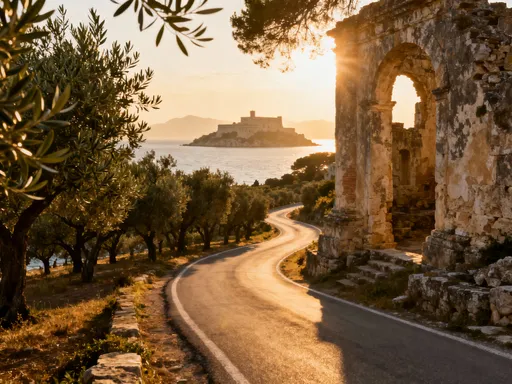
Wander Deeper, Not Farther
Every journey begins with a map, but the most meaningful travels are shaped by the moments that no guidebook predicts—the quiet sunrise over an unnamed hill, the laughter shared in a foreign tongue, the path that diverged not because it was marked, but because curiosity led the way. Choosing where to go is only the first step; how we experience it defines the rest. With thoughtful preparation and mindful presence, travel transforms from mere movement into lasting richness. These subtle shifts in approach—intention, rhythm, attention—do not require grand gestures or distant visas. They ask only that we look closer, listen longer, and arrive not just at new destinations, but within deeper versions of ourselves.
The Art of Intentional Itineraries
Travel often begins with a spark—an image of lavender fields in Provence, the sound of waves on a Greek isle, or the memory of a grandmother’s stories about her homeland. Yet too often, that spark fades under the weight of crowded attractions, rushed transfers, and itineraries shaped more by algorithms than by desire. The antidote lies in intentional travel: a conscious alignment between where we go and why we long to go there. This is not about rejecting popular destinations, but about seeking them with purpose. Research from the Journal of Positive Psychology shows that travelers who define clear emotional or experiential goals—such as reconnecting with nature, deepening family bonds, or practicing solitude—report significantly higher levels of satisfaction and emotional retention than those who travel without such intentions.
Intention shapes experience at every level. When travelers choose destinations based on resonance rather than reputation, they engage more fully. A person drawn to quiet reflection might find greater fulfillment in the remote monasteries of northern Portugal than in the bustling plazas of Barcelona, even if the latter appears more frequently on social media. This deeper alignment begins long before departure. Practical tools like values-based checklists can guide decision-making. For example, a traveler might list core priorities—creativity, tranquility, connection—and score potential destinations accordingly. A seasonal inspiration calendar can also help, matching travel timing to personal rhythms: spring for renewal, autumn for introspection, winter for warmth and gathering.
By anchoring choices in personal meaning, travelers avoid the fatigue that comes from trying to experience everything. Instead, they cultivate a sense of belonging in the places they visit. This is not tourism as consumption, but as communion. The wanderer becomes a witness, not just a visitor. They arrive not only with a suitcase, but with presence. And when intention leads the way, even a short trip can leave echoes that last a lifetime. The result is not merely a collection of photos, but a tapestry of moments that reflect who we are and who we are becoming.
Beyond the Brochure: Finding Hidden Resonance
Iconic landmarks hold a powerful allure. The Colosseum, the Taj Mahal, Machu Picchu—these places have earned their fame through history, architecture, and cultural significance. But their very magnetism can obscure quieter, equally profound experiences just beyond the periphery. A traveler who spends an hour at the Acropolis, then rushes back to the cruise shuttle, may miss the narrow alley in Plaka where an old man plays the bouzouki on his balcony, or the community garden tended by local volunteers on the hillside below. These hidden resonances—places shaped by daily life rather than tourist traffic—often leave deeper impressions than the sites themselves.
Psychologists refer to this phenomenon as “novelty saturation,” where the brain, overwhelmed by constant stimulation, begins to blur distinct experiences into a single, indistinct memory. The more sights packed into a day, the less each one lingers. In contrast, less-visited places allow space for presence. They do not demand attention through scale or spectacle, but invite it through subtlety. A small chapel in the hills of Tuscany, lit by candlelight at dusk, may stir something more lasting than the busiest museum. These spaces speak not to the ego, but to the soul.
Discovering them requires shifting from reactive to reflective exploration. This means resisting the urge to check off lists and embracing the value of local guidance. Platforms like local storytelling networks, community-led walking tours, or cultural cooperatives offer authentic access. In Kyoto, a neighborhood association might host a tea ceremony in a resident’s home. In Oaxaca, a cooperative of weavers might welcome visitors to their studio, sharing not just textiles, but traditions. These experiences are rarely found in guidebooks, but they are precisely where travel becomes transformation.
Moreover, hidden resonances are not limited to remote villages. Even in cities, they exist in plain sight—weekly markets, neighborhood festivals, public gardens where locals gather. The key is to move slowly enough to notice. A traveler who lingers in one district for several days will see more than one who visits ten in a week. By venturing beyond the brochure, we do not reject the famous sites, but we put them in context. We learn that the world is not composed only of landmarks, but of lives—rich, ordinary, beautiful. And in recognizing that, we find ourselves more fully within it.
The Rhythm of the Road
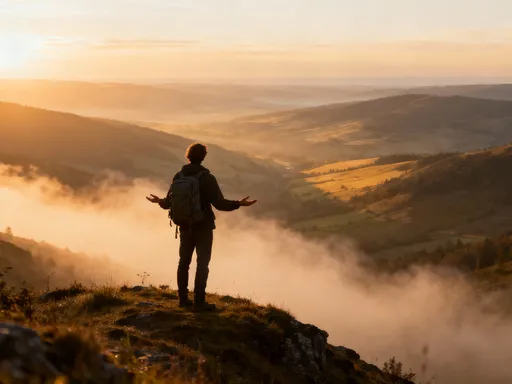
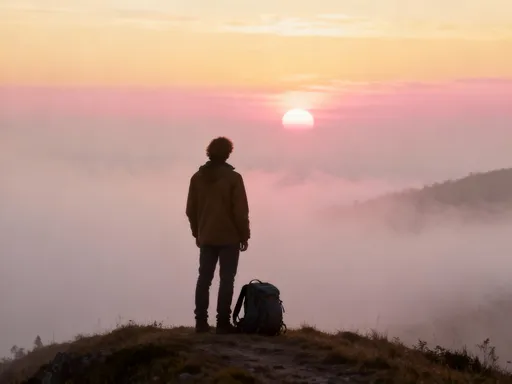
Travel is often measured in distances covered and sites seen, but its true quality is shaped by rhythm—how time unfolds, how pauses are honored, how moments are allowed to breathe. Imagine a traveler who rises at dawn, rushes to a hilltop for sunrise, snaps a photo, and immediately checks the map for the next stop. The experience passes like a flash, a blur of color and movement. Now imagine another who arrives early, sits in silence, watches the light climb the stones, listens to birds awaken, and simply stays. The same location, the same moment, but vastly different depths of engagement. This contrast underscores a vital truth: pacing is not luxury. It is the foundation of meaningful travel.
The metaphor of music offers insight. A symphony is not defined by the number of notes, but by their timing, spacing, and harmony. So too with travel. A day filled with nonstop activity creates dissonance, fracturing attention and dulling sensation. Studies in cognitive psychology show that over-scheduling leads to mental fatigue, reduced memory retention, and lower emotional satisfaction. In contrast, travelers who incorporate downtime—what some call “anchor days”—report greater clarity, heightened awareness, and more vivid recollections. These are not idle days, but intentional ones: moments to rest, reflect, journal, or wander without agenda.
One effective method is the “pause point” system. This involves scheduling short breaks after each major activity—a ten-minute sit on a bench, a tea at a local kiosk, a quiet read in a courtyard. These pauses act as mental reset buttons, allowing the mind to process what has been seen and felt. Similarly, “slow mornings” or “unplanned afternoons” give space for serendipity. It is during these moments that chance encounters occur: a conversation with a shopkeeper, a festival discovered by accident, a path followed simply because it looked interesting.
Technology often works against rhythm, feeding the illusion that every moment must be optimized. But real travel wisdom knows that some of the best experiences are unplanned. A missed bus, a closed museum, a sudden rainstorm—these can become invitations rather than inconveniences. The traveler who adapts with grace may find a café where an old couple shares stories, or a bookstore where a forgotten novel changes their perspective. By honoring rhythm, we do not travel slower—we travel deeper. We trade the checklist for presence, the itinerary for intimacy. And in doing so, we discover that the journey is not a race, but a dance.
Language of the Landscape: Sensory Navigation
Most travel memories are visual—images of sunsets, buildings, faces. But the most enduring impressions often arise from the senses that are less photographed, yet deeply felt. The scent of jasmine drifting through a Seville courtyard at night. The cool smoothness of river stones underfoot in a mountain stream. The distant hum of a temple bell in the Himalayas. These sensory details anchor us in place and time, creating memories that are not just recalled, but re-lived. Neuroscientists have found that sensory input—particularly smell and touch—has a direct pathway to the limbic system, the brain’s emotional center. This is why a whiff of pine resin can instantly transport someone back to a childhood hike, or the sound of waves can calm a mind years after a seaside vacation.
Sensory navigation is the practice of moving through a place with attention to all five senses. It transforms passive sightseeing into active immersion. Consider a traveler in the highlands of Guatemala. They see the vibrant textiles in the market, but it is the smell of woodsmoke and roasting corn, the feel of woven fabric between their fingers, the taste of warm tortillas from a street vendor, and the rhythm of K’iche’ spoken in passing that make the experience whole. These layers of sensation build a multidimensional memory, one that continues to nourish long after return.
Practicing sensory awareness does not require special skills, only deliberate attention. A simple technique is the “sensory journal,” where travelers jot down brief notes each day: one scent, one sound, one texture noticed. Over time, these entries form a personal map of presence. Another approach is the “sensory pause,” where one stops for two minutes and observes only through the senses—no thoughts, no photos, just noticing. These pauses cultivate mindfulness, grounding the traveler in the now.
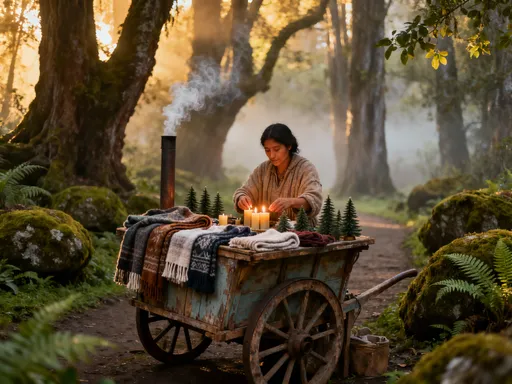
Local environments offer rich opportunities. A rainforest provides a chorus of birdsong and the damp scent of moss. A coastal village delivers the briny air and the crunch of shells underfoot. Even urban settings are alive with sensory detail—the clatter of dishes in a café, the warmth of sun on stone steps, the aroma of baking bread from a corner oven. By tuning in, travelers move beyond the surface. They do not just see a place—they feel it. And in that feeling, they connect not only with the destination, but with themselves. The world becomes not a backdrop, but a conversation. And every sense is a word in that dialogue.
Smart Choices, Not Perfect Ones
Modern travel culture often glorifies optimization—finding the cheapest flight, the best view, the shortest line. This mindset, while practical in parts, can become a source of stress when taken too far. The pursuit of perfection can overshadow presence, turning travel into a high-stakes performance rather than a journey of discovery. A more sustainable approach is adaptive preparedness: making smart, flexible choices that honor both planning and unpredictability. This means preparing well, but remaining open to change. It means choosing confidence over control.
Consider a traveler who plans a precise route through northern Vietnam, only to face a sudden road closure due to rain. The rigid planner may feel frustration, even failure. But the adaptive traveler sees opportunity. They take a local bus to a nearby village, where a family invites them in for tea. The conversation leads to a homestay, an impromptu cooking lesson, and a connection that becomes the highlight of the trip. These moments are rarely found in itineraries, but they are often what people remember most. Research from the University of California’s Travel Behavior Lab shows that travelers who practice flexibility report higher levels of joy, reduced anxiety, and greater memory intensity.
To cultivate this mindset, travelers can use decision filters. One is the “three-why test”: when faced with a choice, ask why three times. Why take this tour? To see the caves. Why? To experience nature. Why? To feel awe. This reveals the deeper motivation, helping align decisions with core values. Another tool is the “joy forecast score,” where options are rated not by efficiency, but by anticipated emotional reward. A longer hike with a better view might score higher than a quick shuttle, even if it requires more effort.
Smart choices also mean knowing when to let go. A missed connection, a delayed train, a wrong turn—these are not failures, but part of the story. The traveler who learns to receive them with curiosity, rather than resistance, discovers resilience. They learn that not every moment needs to be optimized to be valuable. Sometimes, the most meaningful experiences arise from the unplanned, the uncertain, the imperfect. And in embracing that truth, they travel not just with intelligence, but with wisdom.
The Infrastructure of Ease
Behind every smooth journey lies invisible labor—the packing done right, the app downloaded in advance, the luggage that rolls without snagging. These small efficiencies are not luxuries; they are the infrastructure of ease. They free mental space, reduce stress, and create room for wonder. A traveler who spends hours each day sorting through a disorganized suitcase or searching for Wi-Fi to access tickets is not fully present. But one who has prepared thoughtfully can turn attention outward, to the world waiting to be experienced.
Take packing. Mindful packing is not about bringing less, but about bringing right. Luggage with double compartments—one for clean clothes, one for used—eliminates daily sorting. A universal adapter with multiple USB ports prevents charging crises. Rolling clothes saves space; packing cubes create order. These habits, formed before departure, pay dividends throughout the trip. Digital minimalism plays a similar role. Downloading offline maps, saving key documents in a cloud folder, and using travel apps with offline modes reduces dependence on connectivity. This is not about rejecting technology, but about using it intentionally, so it serves rather than distracts.
Transport fluency is another pillar. Knowing how local transit works—bus numbers, metro zones, ride-sharing norms—reduces anxiety and increases independence. A traveler who understands that in Lisbon, the tram 28 runs early but crowds by noon, can plan accordingly. In Tokyo, knowing that trains are punctual to the second allows for precise yet stress-free timing. These skills are learned through research, but practiced through calm repetition.
A customizable pre-departure checklist can consolidate these elements. It might include: confirm visas, download maps, pack medication, share itinerary, charge devices, verify hotel address, and set a “mental reset” reminder for arrival day. This last item—taking quiet time upon reaching a destination—is crucial. It allows the traveler to transition from the stress of transit to the rhythm of place. Real-world data from frequent travelers show that such preparation saves an average of 45 minutes per day in troubleshooting, reducing cortisol levels and increasing engagement.
When logistics are handled with care, travel becomes less about survival and more about discovery. The mind is no longer cluttered with worries about lost tickets or heavy bags. It is free to notice the curve of a river, the pattern of tiles on a wall, the smile of a stranger. Ease is not the opposite of adventure; it is its companion. It is the quiet support that allows the journey to unfold with grace.
Returning Transformed
To return home is not to end a journey, but to enter its next phase—the integration of what has been seen, felt, and learned. The traveler who wanders with intention, presence, and rhythm does not come back unchanged. They carry with them not only souvenirs, but shifts—subtle, lasting, profound. A woman who walked the Camino de Santiago may no longer measure success by speed, but by steps taken with awareness. A mother who spent a week in a coastal village in Sicily may now pause more often, listening to her children with deeper attention. These are not dramatic transformations, but quiet rewirings of habit, perception, and heart.
True travel success is not measured in miles traveled or photos collected, but in the softening of the gaze, the deepening of patience, the quiet expansion of gratitude. The traveler begins to notice beauty in the ordinary—the pattern of frost on a window, the steam rising from a morning cup, the way light falls across the kitchen table. These are not new sights, but new ways of seeing. The world has not changed; the observer has.
Memory plays a key role in this transformation. Unlike digital albums that fade with time, embodied memories—those rooted in sensation, emotion, and presence—linger. A traveler may not remember every name or date, but they recall the warmth of sun on their shoulders in a Roman piazza, the sound of children laughing in a Moroccan alley, the taste of honey from a hillside farm in Crete. These are not recollections, but re-experiences. They return unbidden, in moments of stillness, bringing with them a quiet joy.
And so, the call is not merely to wander, but to wander deeper. To go not for escape, but for expansion. To move through the world with openness, curiosity, and care. For in doing so, we do not just see more of the world—we come to know more of ourselves. We learn that distance is not the measure of a journey. It is depth. And in that depth, we find not only other cultures, but our own humanity. To go far is not to leave home behind, but to bring the world into it. To wander deeper, not farther, is to let the world come close.