Chasing Light and Wonder: Zanzibar’s Wild Beauty Through My Lens
Have you ever seen a sunrise that made you forget to breathe? That’s Zanzibar. Between its turquoise tides, ancient forests, and spice-scented air, this island doesn’t just invite photography—it demands it. I went chasing natural magic with my camera, and what I found went beyond postcard views. From ghostly baobabs to coral caves glowing at low tide, Zanzibar’s raw beauty stunned me at every turn. This is more than travel—it’s visual storytelling at its purest. With each shutter click, I captured not just landscapes, but the quiet pulse of an island where nature and culture breathe in rhythm. Here, light isn’t just illumination; it’s emotion, memory, and revelation.
The Island That Feels Like a Living Canvas
Zanzibar is not merely a dot on the map—it is a living, breathing canvas painted by the hand of nature and time. From the moment one steps onto its soil, the island announces itself through sensation: the warmth of sunbaked stone underfoot, the salt-kissed breeze, and above all, the quality of light. It is a golden, diffused glow that seems to linger longer than in any other coastal destination. Positioned just south of the equator, Zanzibar benefits from consistent daylight patterns, but it’s the interplay of ocean reflection and atmospheric clarity that gives its light a unique, almost ethereal softness. This natural illumination transforms ordinary scenes into extraordinary compositions, making every hour between sunrise and sunset a potential masterpiece.
The island’s geography is a study in contrast, offering photographers a rich tapestry of textures and tones. To the west, long stretches of blinding white sand meet the Indian Ocean’s shifting hues—from pale aquamarine to deep sapphire. To the east, rugged coastlines give way to mangrove forests, their tangled roots emerging from brackish waters like sculptures shaped by time. Inland, the landscape rolls into emerald-green hills and pockets of dense forest, broken by patches of rust-red laterite soil that glow in the late afternoon sun. These visual contrasts are not just pleasing to the eye—they are narrative tools. A single frame can juxtapose the serenity of a calm shore with the wildness of an untamed thicket, telling a story of balance and coexistence.
For photographers, the real magic lies in timing. The so-called golden hour—those first and last 60 minutes of sunlight—stretches longer here due to the island’s proximity to the equator and the reflective nature of the surrounding waters. This extended window allows for deliberate, unhurried shooting, whether capturing the soft pastels of dawn or the fiery oranges of dusk. Blue hour, the brief period just before sunrise or after sunset, also offers dramatic opportunities, especially along the coast, where the sky’s deep indigo contrasts with the silhouettes of traditional dhows or swaying palms. Understanding these natural rhythms is not just beneficial—it’s essential for anyone seeking to capture Zanzibar’s soul.
Nungwi and Kendwa: Where the Ocean Paints the Sky
Nestled at the northernmost tip of Zanzibar, Nungwi and Kendwa are more than beach resorts—they are stages for daily performances of light, motion, and tradition. These villages are where the ocean doesn’t just meet the land; it collaborates with it, creating scenes that evolve with the tides and the turning sun. At dawn, fishermen wade into the shallows, their woven nets casting long shadows across the wet sand. The early light catches the droplets on their nets, turning each strand into a string of diamonds. It’s a moment of quiet industry, one that speaks of generations of coastal life, and it unfolds against a backdrop of calm turquoise waters that deepen to navy as the sun climbs.
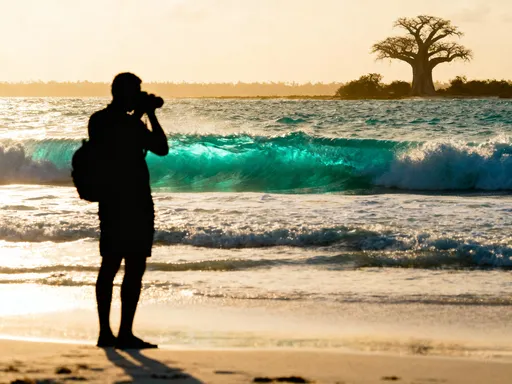
For photographers, Nungwi and Kendwa offer an abundance of vantage points. Rocky outcrops jut into the sea, providing natural tripods for long-exposure shots of waves crashing in rhythmic succession. These formations also create leading lines that draw the eye toward the horizon, where dhows—traditional wooden sailing vessels—often glide silently at sunset. Their silhouettes, sharp against a sky ablaze with color, are among the most iconic images of Zanzibar. Capturing these moments requires patience and preparation. A tripod is essential for stability, especially during low-light conditions, and a polarizing filter can help reduce glare on the water’s surface, revealing the textures beneath.
Long exposure photography transforms the restless sea into a smooth, glass-like plane, contrasting beautifully with the static elements of the scene—driftwood, rocks, or the sturdy legs of a fisherman. But beyond technique, there is an ethical dimension to shooting in these communities. The people of Nungwi and Kendwa are not props; they are custodians of a way of life. Always ask permission before photographing individuals, and when possible, engage in conversation. A smile, a greeting in Swahili, or a moment of shared silence can open doors to more authentic, respectful images. The best photographs are not taken—they are given, born from mutual understanding and trust.
Jozani Chwaka Bay: Forest Light and Hidden Life
Just a short drive from the coast lies Jozani Chwaka Bay National Park, Zanzibar’s only officially protected forest reserve. Here, the island’s wild heart beats strongest. Unlike dense rainforests that swallow light, Jozani is dappled and open, where shafts of sunlight pierce the canopy like spotlights on a stage. The air is thick with humidity and the scent of damp earth, and every step along the wooden boardwalk reveals new textures—velvety moss on tree trunks, the intricate lace of spiderwebs glistening with dew, and the sudden flash of a butterfly’s wings. This is a place of subtle beauty, where stillness reveals movement and silence amplifies sound.
The park is most famous for its population of Zanzibar red colobus monkeys, a rare and endemic species found nowhere else on Earth. These primates, with their striking rust-colored fur and expressive faces, move gracefully through the treetops, often pausing to peer curiously at visitors. Photographing them requires a balance of patience and precision. A telephoto lens allows for respectful distance while still capturing intimate details—the glint in an eye, the delicate fingers grasping a branch. Because the forest environment is often dim, using a higher ISO setting may be necessary, but care must be taken to avoid excessive noise. Shooting in aperture priority mode with a wide opening (low f-number) helps maintain a fast shutter speed while achieving a pleasing depth of field.
But Jozani is more than its monkeys. The park encompasses a mosaic of ecosystems: groundwater forests, salt marshes, and mangrove swamps, each with its own rhythm and inhabitants. The salt marsh, visible from an elevated observation platform, becomes a mirror at certain times of day, reflecting the sky and surrounding trees in a surreal, almost dreamlike composition. Meanwhile, the medicinal plant trail introduces visitors to flora used in traditional healing—aloe vera, neem, and various aromatic herbs—each offering rich macro opportunities. A close-up of a dew-covered leaf or the intricate pattern of bark can become a powerful image, reminding us that beauty often resides in the overlooked.
Stone Town’s Natural Edge: Where Culture Meets Coast
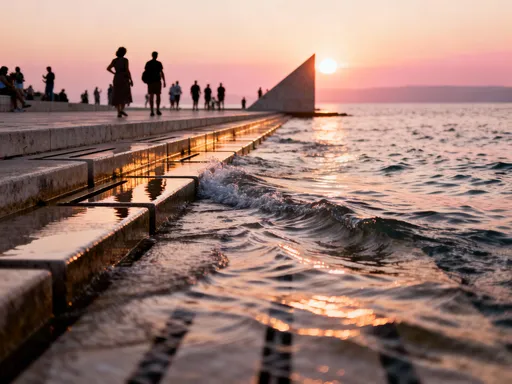
Stone Town, Zanzibar’s historic heart, is renowned for its labyrinthine alleys, carved wooden doors, and colonial architecture. But beyond the well-documented streets lies a quieter, more dynamic boundary—where the built environment dissolves into nature. Along the seawall at Forodhani Gardens, the ocean reclaims the land twice a day. At high tide, waves crash against the stone barrier, sending sprays of foam into the air. At low tide, the water retreats, exposing vast mudflats where children play, fishermen mend nets, and egrets pick through the exposed silt. This constant ebb and flow create a living border, one that shifts with the moon’s pull and offers ever-changing photographic possibilities.
One of the most compelling aspects of this zone is the interplay between human activity and natural forces. A fishing boat, once stranded on the mud, becomes a sculpture of weathered wood and rusted metal, its reflection shimmering in a thin film of water. The mangrove channels that snake between ancient walls are not just ecological features—they are veins of life, filtering water and sheltering juvenile fish. Capturing these scenes requires a wide-angle lens to convey scale and context. A single image can tell multiple stories: the resilience of a community, the adaptability of nature, and the quiet beauty of coexistence.
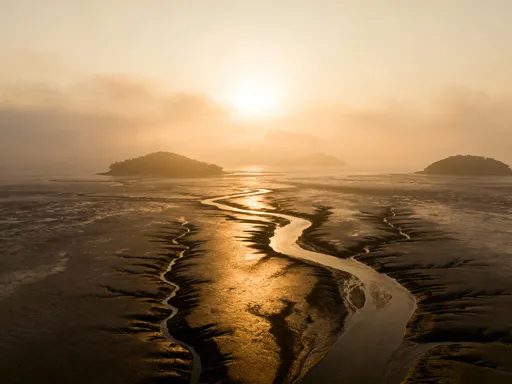
Tidal transitions are the best time to shoot here. The hour before and after high tide offers dramatic water movement, while low tide reveals textures and patterns in the mud that resemble abstract art. Early morning light enhances these details, casting long shadows and soft highlights. Reflections in tidal pools can double the visual impact of a scene, especially when paired with a clear sky. For photographers, this is a lesson in observation: the most powerful images often come not from grand vistas, but from the quiet moments where culture and nature intersect. Respect is paramount—this is a working waterfront, not a stage. Always be mindful of personal space and local customs.
Mnemba Atoll and Misali Island: Underwater Wonders Above Water
While diving and snorkeling reveal the vibrant coral reefs and marine life of Mnemba Atoll and Misali Island, the surface offers its own visual treasures. These protected marine areas, surrounded by crystal-clear waters, are visible from above in ways few underwater ecosystems are. From a boat or a drone (where permitted), the shallow lagoons appear like stained glass—patches of coral in hues of orange, purple, and green visible beneath the ripple of the surface. The contrast between the deep blue of open water and the luminous shallows creates a natural mosaic, one that shifts with the sun’s angle and the tide’s depth.
Drone photography, when allowed under local regulations, provides a breathtaking perspective. Aerial shots of Misali Island reveal its pristine beaches framed by coral reefs, with driftwood and coconut husks scattered like natural sculptures. The isolation of these islets—remote, untouched, and teeming with life—evokes a sense of timelessness. But even without a drone, the shoreline offers compelling subjects. Tidal pools become miniature aquariums, their still waters reflecting the sky and magnifying the textures of coral and sea urchins. A macro lens can capture the delicate arms of a starfish or the iridescent shell of a cowrie, turning small details into large statements.
Birdlife adds another layer to the narrative. Frigatebirds circle overhead, their forked tails cutting through the sky, while terns and gulls nest on rocky outcrops. Capturing these moments requires a fast shutter speed to freeze motion, especially in the midday light when the birds are most active. The challenge lies in balancing exposure—bright skies can easily overpower darker subjects. Using spot metering on the bird’s body helps maintain detail in the feathers. These islands are not just destinations; they are reminders of what remains when human impact is minimized. Every photograph taken here is a tribute to preservation, a visual argument for protecting such fragile places.
The Spice Farms: A Sensory Frame
Zanzibar’s reputation as the “Spice Island” is well-earned. Its fertile soil and tropical climate nurture an array of aromatic plants—cloves, vanilla, cinnamon, nutmeg, and black pepper—each with its own story and texture. While spice tours are often marketed as olfactory experiences, they are equally rich for visual storytelling. A walk through a spice farm is a journey into a world of close-up wonders: the waxy sheen of a clove bud, the delicate curls of a vanilla vine, the rough, peeling bark of a cinnamon tree. These are not just ingredients; they are living forms, each with a unique geometry and color palette.
Macro photography thrives in this environment. Using a dedicated macro lens or extension tubes, photographers can isolate small details and transform them into abstract compositions. Backlighting, achieved by positioning the subject between the lens and the sun, enhances translucency—revealing the veins of a leaf or the dew inside a flower. A shallow depth of field (achieved with a wide aperture like f/2.8) blurs the background, drawing focus to a single clove or a cluster of pepper berries. These images do more than document; they invite the viewer to see the familiar in a new way, to appreciate the artistry of nature’s design.
But beyond technique, the spice farms offer a human connection. The farmers who tend these plants are keepers of knowledge passed down through generations. Their hands, weathered and skilled, are as much a part of the story as the plants themselves. A portrait of a farmer holding a sprig of cloves, bathed in soft morning light, can convey warmth, pride, and continuity. These moments are best captured with natural light and a respectful approach. Always seek permission, and when possible, share the images afterward. In doing so, photography becomes not just an act of observation, but of exchange.
Chumbe Island and the Vanishing Tides
Chumbe Island, a privately managed nature reserve, stands as a model of sustainable conservation. Access is limited, rules are strict, and the focus is on preserving one of the last intact coral rag forests and reef systems in the region. For photographers, this means a rare opportunity to capture nature in its most undisturbed state. The island’s coral sanctuary is home to over 200 species of fish and 90% of Tanzania’s hard coral species, but even without diving, the shoreline offers stunning visuals. The intertidal zone, exposed at low tide, becomes a living gallery of marine life—sea anemones, crabs, and starfish clinging to rocks, their colors intensified by the wet surface.
One of the most surreal features of Chumbe is the causeway that appears only during low tide. This narrow path of sand and coral connects the mainland to the island, stretching across the water like a bridge to nowhere. At sunrise or sunset, it becomes a powerful compositional element—a single line leading into the horizon, evoking solitude, journey, and connection. Minimalist photography finds its perfect subject here. A lone figure walking the causeway, backlit by the sun, can symbolize reflection, transition, or the human search for meaning in nature.
But beyond aesthetics, Chumbe represents a deeper truth: that beauty and preservation are inseparable. Every photograph taken here carries a responsibility—not just to capture, but to protect. The island’s strict eco-guidelines prohibit littering, touching coral, or disturbing wildlife, and these rules apply to photographers as much as to visitors. Using a telephoto lens to observe rather than approach, avoiding flash in sensitive areas, and packing out all gear are simple but vital practices. In the end, the most powerful image may not be the one that wins awards, but the one that inspires someone to care. Zanzibar’s wild beauty is fleeting, shaped by tides, time, and human choices. Through the lens, we do not just see it—we bear witness to it, and in doing so, we help ensure it endures.