You Won’t Believe What I Saw in Komodo’s Wild Heart
Komodo, Indonesia, is more than just a remote island—it’s a living showcase of Earth’s raw power and beauty. From dragon-like lizards roaming freely to pink sandy beaches and volcanic ridges, this UNESCO site pulses with primal energy. I went not for luxury, but for truth—the kind only untouched nature delivers. What I found wasn’t just scenery, but a story written in tides, fire, and time. It’s a place where silence speaks louder than words, and every footprint on the trail feels like a step back into the origins of life itself. This is not an ordinary destination. It’s a revelation.
The First Step: Arriving in Komodo – A World Apart
Landing on Komodo Island is less like checking into a resort and more like entering a natural archive—unchanged for millennia. The journey typically begins in Labuan Bajo, a coastal town on the western tip of Flores Island, which serves as the primary gateway to Komodo National Park. From there, travelers board wooden phinisi boats—traditional Indonesian sailing vessels—that glide across the Flores Sea under morning light. The two- to three-hour boat ride sets the tone: simple, scenic, and soul-stirring. There are no jet skis, no loudspeakers, only the rhythm of waves and the occasional cry of a white-bellied sea eagle overhead.
As the island emerges on the horizon—jagged, arid, and cloaked in golden savanna—there’s a palpable shift in atmosphere. The air grows warmer, drier, and scented faintly with salt and dry grass. Stepping onto the dock at Loh Liang, the main visitor hub, one is immediately greeted by park rangers in khaki uniforms, their presence both reassuring and symbolic. They are not just guides but guardians, entrusted with protecting one of the most biologically unique places on Earth. There are no souvenir stalls, no tuk-tuks, no distractions. Just a small information center, a ranger station, and a trailhead leading into the wild.
The sensory experience is immediate and immersive. The sun beats down with intensity, reminding visitors that this is a place ruled by nature, not convenience. The silence between gusts of wind is profound—no city hum, no background noise, just the occasional rustle of a palm frond or the distant call of a crab-eating macaque. This absence of human clutter is precisely what makes Komodo so powerful. It doesn’t cater to comfort; it demands respect. Every step forward is a choice to engage with the raw, unfiltered world—one where survival is not guaranteed, and awe is inevitable.
Beyond the Dragons: The Real Story of Komodo National Park
While the Komodo dragon—Varanus komodoensis—commands headlines and headlines alone, the island’s true marvel lies in its extraordinary biodiversity. Komodo National Park, established in 1980 and designated a UNESCO World Heritage Site in 1991, spans nearly 1,800 square kilometers, encompassing not just Komodo Island but also Rinca, Padar, and numerous smaller islets. It is a sanctuary where land and sea ecosystems converge in rare harmony. The dragons, though iconic, are just one thread in a vast ecological tapestry.
The park’s terrestrial environment is shaped by its dry savanna climate, with sparse vegetation dominated by lontar palms, acacia trees, and hardy shrubs that survive long dry seasons. This harsh landscape supports a surprising variety of life: Timor deer, wild boars, and water buffalo serve as prey for the dragons, while fruit bats, civets, and numerous bird species contribute to seed dispersal and insect control. The balance is delicate—remove one species, and the entire system trembles.
Equally vital is the marine realm. Beneath the surface, Komodo sits at the heart of the Coral Triangle, the most biodiverse marine region on the planet. Its waters host over 1,000 species of fish and more than 260 types of coral. Mangrove forests along sheltered coastlines act as nurseries for juvenile fish, while seagrass beds anchor the food chain for green sea turtles. Currents swirl through narrow straits, bringing nutrients that fuel this underwater abundance. What makes this ecosystem so remarkable is its isolation—protected by strong tides and limited access, it has evolved in near-seclusion.
Conservation efforts here go far beyond protecting a single species. Rangers monitor dragon nests, track poaching attempts, and conduct regular biodiversity surveys. Scientific research informs management strategies, ensuring that tourism does not compromise ecological integrity. Visitors may come for the dragons, but what they witness is something deeper: a functioning ecosystem where every creature, from the smallest shrimp to the largest lizard, plays a role. It’s a living classroom in interdependence—one that reminds us how fragile such balance can be.
Hiking the Volcanic Ridges: A View That Changes You
One of the most transformative experiences in Komodo is the hike to Bukit Romang, a volcanic ridge that offers a panoramic vista stretching across multiple islands. The trail begins just beyond Loh Liang, winding through dry forest and rocky outcrops. The ascent is steep, and the midday sun offers no mercy. Temperatures often exceed 35°C (95°F), and shade is scarce. Yet, the physical challenge is part of the journey—a test of endurance that mirrors the resilience of the landscape itself.
Along the way, the terrain shifts dramatically. One moment, you’re stepping over gnarled tree roots; the next, you’re navigating loose volcanic scree that shifts underfoot. The vegetation grows sparser as elevation increases, giving way to windswept grasses and isolated shrubs. Occasionally, a monitor lizard—smaller than its famous cousin—darts across the path, vanishing into the underbrush. The air grows thinner, the wind stronger, carrying the scent of salt and hot stone.
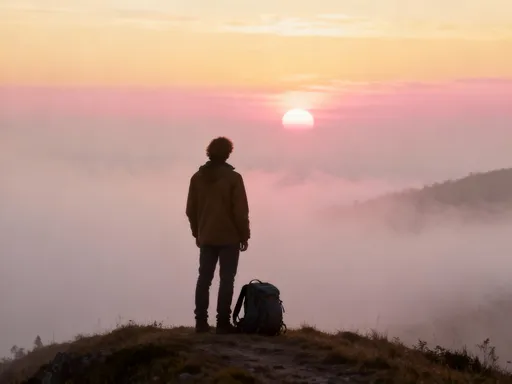
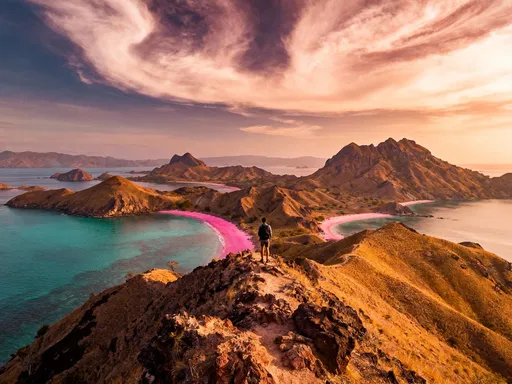
Then, suddenly, the ridge opens up. From the summit, the view is nothing short of breathtaking. To the north, the serrated coastline of Komodo Island cuts into the sea. To the south, the deep blue waters of the Sape Strait churn with powerful currents. In the distance, Padar Island rises like a fortress, its three peaks cloaked in ochre and green. The ocean below shifts color with depth—turquoise near the shore, sapphire in the channels, and navy where the seabed plunges. Hidden coves, invisible from sea level, reveal themselves like secrets.
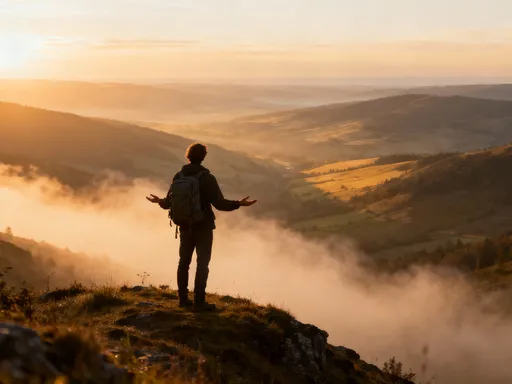
But it’s not just the visual spectacle that moves people. It’s the silence. Standing atop that ridge, with the wind in your hair and the sun on your skin, you feel small in the best possible way. Not insignificant, but connected—to the earth, to time, to something greater than daily life. Many visitors report a shift in perspective after this hike, a quiet recalibration of what matters. In a world of constant noise and distraction, Komodo offers a rare gift: stillness that speaks.
Pink Beach: Nature’s Rare Masterpiece
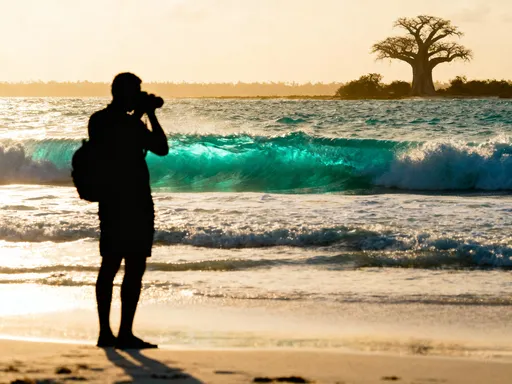
Few natural phenomena are as visually striking as Komodo’s Pink Beach, one of only seven pink sand beaches in the world. Located on the eastern coast of Komodo Island, this stretch of shoreline owes its blush hue to microscopic organisms known as foraminifera. These tiny reef-dwelling creatures produce red pigments, and when their shells mix with white coral fragments and crushed limestone, they create sand that glows in soft rose tones—especially at sunrise and sunset.
The science behind the color is as fascinating as the sight itself. Foraminifera live in symbiosis with red algae, and their populations are sensitive to water temperature and pH levels. This means the pink tint can vary seasonally—more vivid after calm periods, less pronounced after storms. The best time to visit is during the dry season, from April to December, when the skies are clear, the seas are calm, and the sand appears most vibrant. Early morning visits offer not only the best light but also fewer crowds, allowing for a more intimate experience.
Yet, with beauty comes fragility. Pink Beach is not a playground; it is a delicate ecosystem in constant flux. Touching live coral, stepping on reef flats, or removing sand—even as a souvenir—can cause irreversible damage. Park regulations strictly prohibit such actions, and rangers routinely patrol the area to enforce compliance. Responsible tourism means observing without interfering, photographing without disturbing, and leaving no trace.
Visitors are encouraged to snorkel just offshore, where the coral remains healthy and marine life thrives. Parrotfish, angelfish, and blue tang dart among the reef, while octopuses camouflage themselves in crevices. The contrast between the pink shore and the blue sea creates a surreal, almost dreamlike scene—one that underscores nature’s ability to craft beauty from the smallest building blocks. To stand on Pink Beach is to witness a miracle of geology and biology, a fleeting masterpiece that could vanish if not protected.
Beneath the Surface: Snorkeling in Crystal Waters
If Komodo’s land is dramatic, its underwater world is nothing short of magical. Snorkeling here is not an add-on activity—it’s a central experience. The park’s strong tidal currents bring nutrient-rich waters that sustain an explosion of marine life. Sites like Manta Point, Crystal Rock, and Batu Bolong are world-renowned for their biodiversity and visibility, often exceeding 30 meters on clear days.
Manta Point, located between Komodo and Rinca, is a cleaning station where giant manta rays—some with wingspans over four meters—gather to have parasites removed by small fish. Snorkelers float quietly above, watching these graceful creatures glide in slow, sweeping arcs. Their movements are hypnotic, almost meditative. Unlike in aquariums or controlled environments, encounters here are wild and unpredictable—no guarantees, only possibilities. That uncertainty is part of the thrill.
Other sites reveal different wonders. Batu Bolong features a submerged rock formation surrounded by swirling currents that attract schools of barracuda, jacks, and bumphead parrotfish. The coral here is vibrant, with soft corals waving like underwater gardens and hard corals forming intricate mazes. Reef sharks patrol the edges, not out of threat, but as part of the natural order. For many, seeing a shark in its element—calm, focused, essential—is a moment of profound respect.
Snorkeling in Komodo requires preparation. The currents can be strong, so beginners are advised to go with experienced guides and wear floatation vests. Rash guards protect against sun and coral scrapes, while reef-safe sunscreen prevents chemical pollution. Guides often brief groups on marine etiquette: no touching, no chasing, no standing on coral. These rules aren’t suggestions—they’re survival strategies for an ecosystem still recovering from past damage. Thanks to protected zones and sustainable practices, fish populations have rebounded significantly since the 1990s. Every snorkel is not just a sightseeing trip, but a testament to conservation’s power.
Living Sustainably: How Tourism Supports Conservation
Tourism in Komodo is not incidental to conservation—it is its foundation. Every visitor pays an entry fee, which directly funds park management, ranger salaries, habitat restoration, and community development. As of recent regulations, foreign adults pay a conservation fee that contributes to long-term ecological monitoring and anti-poaching efforts. These funds are not abstract; they translate into real-world impact: new patrol boats, upgraded monitoring equipment, and training for local staff.
Guided tours are mandatory, ensuring that visitors follow established trails and do not wander into sensitive areas. Certified guides—many of them locals trained in ecology and safety—are more than interpreters; they are educators and protectors. They teach visitors about dragon behavior, explain the importance of coral reefs, and model responsible conduct. Their presence reduces the risk of human-wildlife conflict and ensures that tourism remains low-impact.
Local communities also benefit. Homestays on nearby islands, boat crew positions, and handicraft sales provide income that incentivizes conservation. When people see economic value in protecting nature, they become its stewards. This model of community-based eco-tourism has proven effective in reducing illegal fishing and habitat destruction. It’s a virtuous cycle: responsible travel supports conservation, which in turn preserves the very attractions that draw visitors.
Yet, sustainability requires vigilance. Overcrowding, improper waste disposal, and disregard for rules can undo years of progress. That’s why visitor numbers are carefully managed, and certain areas are closed seasonally for recovery. Travelers are asked to follow a simple principle: take only photos, leave only bubbles. It’s not about perfection, but intention. Every conscious choice—to stay on the path, to respect distance, to support local guides—adds up. In Komodo, tourism isn’t just allowed; it’s designed to heal.
Why Komodo Stays With You – The Quiet After the Adventure
Long after the tan fades and the photos are uploaded, Komodo remains. It lingers not as a memory of sights, but as a shift in awareness. Most travel is consumed quickly—experienced, shared, forgotten. But Komodo is different. It doesn’t sit neatly in an album. It settles in the mind like a quiet truth: that there are still places where nature writes the rules, where silence has weight, and where life unfolds without human permission.
Visitors often return home with a renewed sense of responsibility. They speak less of what they saw and more of how it felt—the heat, the stillness, the sense of being watched by something ancient. Parents share stories with their children not just about dragons, but about balance, about consequence, about the interconnectedness of all living things. For many women in their thirties to fifties—juggling families, careers, and personal dreams—Komodo becomes a touchstone, a reminder that wonder still exists beyond daily routines.
This is the deeper impact of travel: not the stamp in the passport, but the change in perspective. Komodo challenges the notion that we must conquer nature to appreciate it. Instead, it teaches reverence, patience, and humility. It shows that protection is not a burden, but a privilege. And it proves that even in a world of constant change, some places endure—not untouched, but respected.
As global pressures mount—climate change, overfishing, habitat loss—Komodo stands as a symbol of resilience. It is not immune to threats, but it is fighting back, thanks to science, community, and thoughtful tourism. To visit is not just to witness a wild place, but to become part of its story. The dragons may be the face of Komodo, but its heart beats in every coral polyp, every grain of pink sand, every ranger’s quiet vigil. And that heart, fierce and fragile, is worth protecting—for our children, for the planet, and for the quiet moments that change us forever.