How I Cracked Early Retirement Without Winning the Lottery
What if retiring a decade early wasn’t about luck or a six-figure salary? I’m just a regular person who wanted out—out of burnout, out of the 9-to-5 grind, and into real freedom. After years of trial, error, and costly mistakes, I discovered practical financial methods that actually work. No hype, no get-rich-quick schemes. This is about building momentum with smart moves anyone can make. Let me show you how it’s possible—and closer than you think. It started not with a windfall, but with a quiet realization: I was working hard, yet feeling further from peace, time, and control. The truth is, early retirement isn’t reserved for tech founders or lottery winners. It’s achievable through clarity, consistency, and a strategy grounded in reality. This is the journey of how one ordinary life transformed into something extraordinary—not by chance, but by choice.
The Wake-Up Call: Why I Needed a New Financial Roadmap
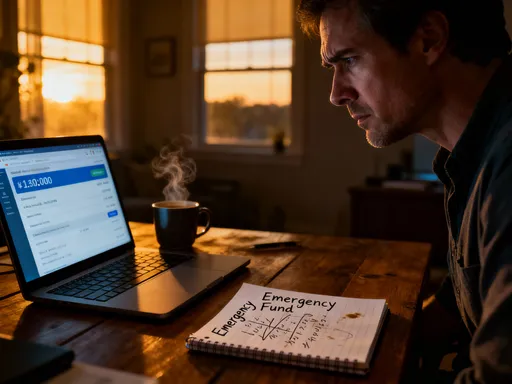
For years, I believed I was doing everything right. I held a stable job, paid my bills on time, and even contributed a little to a retirement account. But when I sat down one evening to review my financial picture, the numbers told a different story. Despite earning a decent income, I had less than six months of expenses saved. My retirement projection, based on current savings and expected returns, showed I’d need to work until I was 72 to maintain my current lifestyle. That revelation hit like a cold splash of water. I wasn’t just behind—I was on a path that would cost me decades of my most vibrant years.
The emotional toll was just as heavy. I felt trapped. The job that once felt like a stepping stone had become a treadmill. I was working longer hours, saying no to family events, and sacrificing weekends to keep up. The promise of “someday” retirement felt more like a distant mirage than a real goal. I began to question whether comfort later in life was worth the exhaustion now. Was there another way? The answer began to form not in a moment of inspiration, but in a series of small, uncomfortable realizations. I was spending more on convenience than I realized—takeout meals, subscription services I barely used, and frequent online purchases that felt harmless in isolation but added up fast.
What changed was not my income, but my mindset. I shifted from asking, “How can I earn more?” to “How can I live well with less?” This wasn’t about deprivation; it was about intentionality. I started tracking every dollar, not to punish myself, but to understand where my financial energy was going. That simple act revealed leaks I hadn’t noticed—automatic renewals for apps I no longer used, bank fees, and lifestyle inflation that crept in with each raise. Once I saw the full picture, I could act. The wake-up call wasn’t just about numbers; it was about reclaiming control. And that shift in perspective became the foundation of everything that followed.
The Foundation: Building a Financial Base That Works
Before chasing dreams of early retirement, I had to stabilize my financial ground. I learned that no investment strategy, no matter how brilliant, can succeed on shaky ground. The first and most critical step was building a solid foundation—emergency funds, predictable cash flow, and debt control. These elements may not sound exciting, but they are the bedrock of financial resilience. Without them, even small setbacks can turn into crises. I started with the most basic tool: a detailed budget. Not the kind that counts every coffee, but one that reflects real life and personal values.
For three months, I tracked every expense. I used a simple spreadsheet, categorizing spending into housing, food, transportation, entertainment, and miscellaneous. What emerged was eye-opening. I was spending nearly $200 a month on subscriptions—streaming services, apps, and membership boxes I rarely used. Another $150 went to dining out, often on days when I was too tired to cook. These weren’t reckless splurges, but habits formed over time, unnoticed. Once I saw the patterns, I could make informed choices. I canceled unused subscriptions, switched to a more affordable phone plan, and started meal planning to reduce food waste and impulse orders.
At the same time, I tackled high-interest debt. I had two credit cards with balances, one at 19% APR and another at 22%. I used the avalanche method, focusing on the highest-interest debt first while making minimum payments on the other. It wasn’t fast, but it was effective. I also set a strict rule: no new credit card spending unless I could pay it off in full that month. Within 18 months, both cards were paid off. That freed up hundreds of dollars each month, which I redirected into savings.
The next step was building an emergency fund. I aimed for three months of essential expenses—rent, utilities, groceries, insurance, and transportation. That came to about $9,000. I automated a $300 monthly transfer to a high-yield savings account, treating it like a non-negotiable bill. It took time, but having that cushion changed my relationship with money. I no longer panicked when the car needed repairs or when a medical bill arrived. I had breathing room. This foundation didn’t require drastic measures—just consistency and clarity. It gave me the stability to think long-term, to invest with confidence, and to move forward without fear of being derailed by life’s inevitable surprises.
The Power of Compounding: Making Time Your Greatest Ally
One of the most transformative lessons I learned was the true power of compounding. For years, I thought of investing as something for the wealthy or the financially savvy—something risky and complex. But when I finally studied how compounding works, it changed everything. Compounding is simply earning returns not just on your initial investment, but on the returns themselves over time. It’s like a snowball rolling down a hill, growing larger as it picks up more snow. The earlier you start, the more dramatic the effect—even with modest contributions.
I began with $100 a month. It didn’t feel like much, but I committed to it. I chose a low-cost, diversified index fund that tracked the broader market. I didn’t try to pick winners or time the market. Instead, I focused on consistency. I automated the monthly contribution so I wouldn’t forget or talk myself out of it. Over time, something remarkable happened. After five years, that $100-a-month investment had grown to over $7,500, including gains. After ten years, assuming a conservative average annual return of 7%, it would be worth nearly $17,000. And after 20 years? Over $52,000. All from a relatively small, regular commitment.
The real power of compounding lies in time. Starting early—even by just five years—can double or triple your final outcome. I saw this in my own journey. If I had waited until age 35 to start investing $100 a month, I’d have about half as much by age 55 compared to starting at 25. That gap isn’t due to earning more; it’s due to time. This insight shifted my entire approach. I stopped seeing investing as a gamble and started seeing it as a slow, reliable engine of growth. I also diversified across asset classes—stocks, bonds, and real estate investment trusts—to reduce risk while maintaining long-term growth potential.
Another key was staying the course during market downturns. I remember the first big dip after I started investing. The balance on my account dropped 15% in a few weeks. My instinct was to pull out, to “save” what was left. But I reminded myself that volatility is normal, and selling locks in losses. Instead, I kept contributing. In fact, I saw downturns as opportunities to buy more at lower prices. Over time, the market recovered, and my portfolio not only bounced back but grew beyond its previous peak. Compounding rewards patience. It doesn’t require genius or luck—just discipline and time. And that’s something every person, regardless of income, can harness.
Income That Works for You: Designing Streams That Last
Early retirement doesn’t mean stopping all income—it means replacing active income with sources that require less daily effort. The goal isn’t idleness, but freedom. I wanted to trade time-for-money jobs for income streams that could sustain my life without demanding my constant presence. This wasn’t about getting rich overnight, but about building systems that generate returns over time. I focused on three main types: dividend-paying investments, rental income, and scalable side ventures.
Dividends became a cornerstone of my strategy. I gradually shifted a portion of my portfolio into stocks and funds that paid regular dividends. These are companies with strong cash flows that return a portion of profits to shareholders. While the yields may seem modest—typically 2% to 4% annually—they are paid quarterly and can be reinvested to buy more shares, further accelerating compounding. Over time, this created a steady drip of income that required no action on my part. Even during market downturns, many dividend-paying companies continued to pay out, providing a reliable financial cushion.
Rental income was another pillar. I didn’t jump into real estate blindly. I spent a year researching markets, financing options, and property management. I eventually purchased a modest two-bedroom condo in a stable neighborhood, using a 20% down payment to avoid private mortgage insurance. I rented it out through a property management company, which handled tenant screening, maintenance, and rent collection for a fee. After mortgage, taxes, insurance, and fees, the property generated about $300 in positive cash flow each month. It wasn’t life-changing money, but it covered a significant portion of my monthly expenses. More importantly, it built equity over time and appreciated in value.
The third stream came from a digital product I developed—a simple online course teaching budgeting and financial tracking. I created it during evenings and weekends, using free tools and platforms. Once launched, it required minimal upkeep but generated recurring revenue through automated sales. It wasn’t a viral hit, but it brought in a few hundred dollars a month, which I reinvested or used for discretionary spending. The beauty of this stream was its scalability—no extra effort was needed to serve more customers.
None of these income sources were built in a year. They required patience, research, and upfront effort. But each one reduced my dependence on a paycheck. Together, they created a mosaic of income that supported my lifestyle without demanding my time. This is the essence of financial freedom: not having unlimited money, but having control over how you spend your days.
Risk Control: Protecting What You’ve Built
Chasing returns is exciting. Protecting what you’ve earned is less glamorous but far more important. I learned this the hard way. In my early investing years, I concentrated too much in a single sector—technology stocks—that performed well for a while. When the market corrected, my portfolio dropped nearly 30% in a few months. It was a wake-up call. I realized that without proper risk management, all my progress could vanish in a downturn. That’s when I shifted focus from maximizing gains to preserving capital.
Diversification became my primary tool. I spread my investments across different asset classes—U.S. stocks, international equities, bonds, and real estate. I also diversified within categories, avoiding overexposure to any single company or industry. This didn’t eliminate risk, but it reduced the impact of any one failure. I also adopted a balanced allocation based on my risk tolerance and time horizon. As I got closer to retirement, I gradually shifted toward more conservative holdings, increasing my bond exposure to reduce volatility.
Another critical layer was insurance. I reviewed my health, disability, and life insurance policies to ensure they were adequate but not excessive. Disability insurance, in particular, was something I’d overlooked. Yet it protects income—the very thing I was working to replace. I also established a basic estate plan, including a will and power of attorney, to protect my family in case of incapacity. These steps weren’t about fearing the worst, but about preparing for it.
Tax efficiency also played a role. I maximized contributions to tax-advantaged accounts like IRAs and 401(k)s, which allowed my investments to grow with deferred or tax-free gains. I also paid attention to capital gains, avoiding unnecessary sales that could trigger taxes. I reviewed my entire financial strategy annually, adjusting for life changes, market conditions, and new goals. Risk control isn’t about playing it safe—it’s about playing smart. It’s about building a system that can withstand setbacks without collapsing. And that kind of resilience is what makes early retirement sustainable.
The Real Cost of Freedom: Lifestyle Design and Sustainable Spending
Freedom has a price—even in retirement. I realized that without a clear vision, it’s easy to overspend, undersave, or lose direction. I needed to define what “enough” meant for me. I sat down and mapped out my ideal post-work life: moderate travel, time for hobbies, access to healthcare, and the ability to help family when needed. I then reverse-engineered the numbers. How much would that lifestyle cost annually? I estimated $40,000, including housing, food, insurance, travel, and discretionary spending.
This helped me calculate a safe withdrawal rate. Financial planners often suggest withdrawing no more than 3% to 4% of your portfolio each year to avoid running out of money. With a $1 million portfolio, a 4% withdrawal would provide $40,000 annually—exactly what I needed. That became my target. But I didn’t stop there. I built in flexibility. In years when the market performed poorly, I committed to tightening my budget—postponing travel, delaying non-essential purchases. In strong years, I allowed myself a bit more. This flexible spending model reduced stress and helped me stay on track.
I also focused on aligning my spending with my values. I cut back on things that didn’t matter—luxury brands, frequent dining out—but spent freely on what did: quality time with family, learning new skills, and outdoor activities. This wasn’t austerity; it was intentionality. I discovered that happiness didn’t come from spending more, but from spending meaningfully. I also planned for healthcare costs, setting aside funds in a Health Savings Account (HSA) for future medical needs. This gave me peace of mind, knowing I wasn’t ignoring a major expense.
The real cost of freedom isn’t just financial—it’s behavioral. It requires discipline, awareness, and the willingness to say no to impulses. But when your spending reflects your values, it doesn’t feel like sacrifice. It feels like clarity. And that clarity is what makes early retirement not just possible, but deeply fulfilling.
Putting It All Together: A Realistic Path to Early Financial Freedom
There’s no single secret to early retirement. But there is a pattern—a sequence of practical, repeatable steps that anyone can follow. My journey wasn’t linear. There were setbacks—job changes, market drops, personal doubts. There were months when I skipped investments or overspent. But I kept returning to the core principles: budget with intention, invest consistently, manage risk, and build income that lasts. Each small decision added up. Progress wasn’t flashy, but it was real.
I didn’t need a lottery win, a startup exit, or a six-figure salary. I needed discipline, clarity, and time. I started with a budget that reflected my values. I built an emergency fund for stability. I invested early and often, letting compounding work in my favor. I diversified income through dividends, rentals, and scalable projects. I protected my gains with smart risk management. And I designed a lifestyle that was sustainable and meaningful.
Today, I’m not on a tropical island or living in a mansion. I’m in a modest home, spending my days as I choose—reading, hiking, volunteering, and spending time with loved ones. My income covers my needs, and my expenses stay within sustainable limits. I wake up without an alarm. I work when I want to, not because I have to. This is the freedom I once thought was impossible.
Early retirement isn’t a fantasy. It’s a choice—a series of choices, made over time. It’s available to anyone willing to start small, stay consistent, and focus on what truly matters. You don’t need to win the lottery. You just need to begin. And the best time to start is now.